
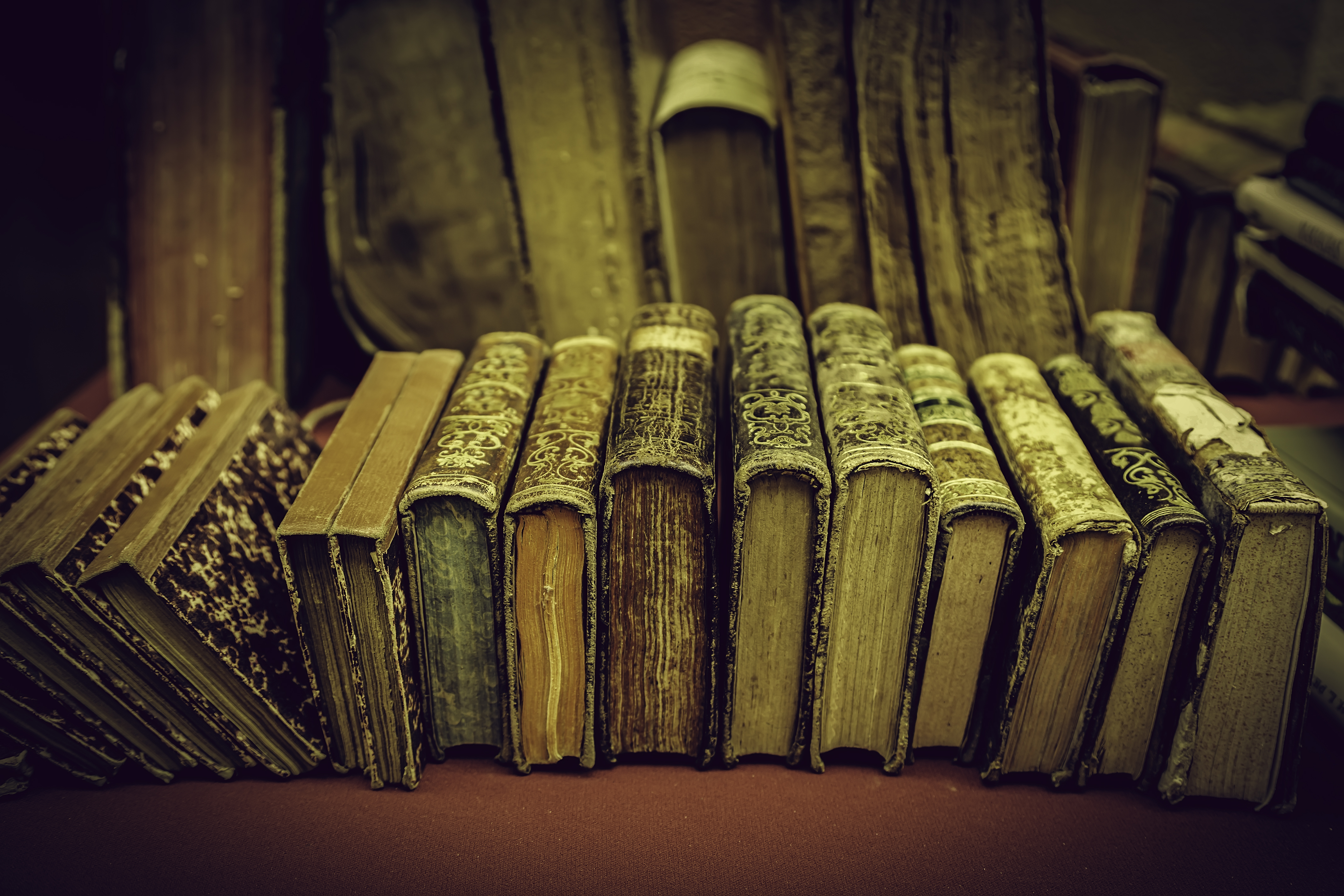
The entire modern world seems to be doing everything it can to rob us of our humanity. Everywhere we turn, every reaction we have is either mediated or a byproduct of our current technological environment. Pretty much every piece of content we encounter online is a form of manipulation. This tiresome cacophony of content overwhelms our senses and wears us down. But we have a superpower, it’s called literacy. Literacy creates robust humans and is our greatest weapon to defend our humanity. It creates space for us to reflect and withhold our reactions. However, maybe not for long, as the kryptonite of content, entertainment, and instant reactions destroys this superpower, turning us into mindless, predictable automatons.
I know, I read so I must be some kind of loser who doesn’t know how to prompt. However, if books are so worthless, then why are AI companies frothing at the mouth to scan every book they can and don’t want you to know about it?
I do make time for this “friction” every day. This isn’t said to sound elitist, after all, I still watch TV shows and movies too. I wouldn’t even say I’m a particularly good reader, but I make do. And making do with reading is the whole point. Reading isn’t like baseball, where trying hard isn’t enough to be a starter. Reading makes you better, and trying hard pays off no matter how good you are.
As a matter of fact, if you want to maintain your humanity in a world that’s doing everything to steal it from you, then literacy is your greatest weapon.
What Orwell feared were those who would ban books. What Huxley feared was that there would be no reason to ban a book, for there would be no one who wanted to read one. -Neil Postman
The Reading List For Robust Humans
It’s really hard to find books these days that provide a critical lens of technology or AI without also being filled with politics, biases, and other assorted bullshit. I feel that the world really does need a better class of critic.
I’ve read some highly recommended, well-reviewed AI books that were absolutely terrible. Mostly filled with junk food for biases. The few good points that were made were mercilessly beaten like a dead horse, revived, and then beaten again, which I can only assume happened for the sake of page count or the author’s own personal indulgences.
This post is my attempt to save you some time. There are many great books that didn’t make the list because it would have made it too long. So what I tried to do with this list is provide some objective books that examine the impact technology has on us humans, with a focus on impact, experience, background, and data. Although some of these books may cover similar ground, they are all worthy reads.
Technopoly: The Surrender of Culture to Technology – (1992) – Neil Postman

You may wonder how a technology book from 1992 can be relevant today. That’s because Neil Postman was a true oracle. He was the Marshall McLuhan of the 80’s and 90’s. He could cut through the noise and see the reality of things. Every single chapter is filled with insight, and the dated examples could be easily swapped out for today’s. Mostly, it’s a book that demonstrates people of the past saw the problems of our current time, long before they surfaced. It’s an amazing book, which is why it’s the first on my list.
Amusing Ourselves to Death: Public Discourse in the Age of Show Business – (1985) – Neil Postman

Okay, I couldn’t help myself. Here is a bonus Neil Postman book. Quite often, this book is the first port of call for Neil Postman. Despite the references to television, it’s an easy swap out for other technology. There’s so much interesting history here, such as the history of advertising, with some examples from the early days when our culture was more literate. Fascinating read.
I am saying we are losing our sense of what it means to be well informed. Ignorance is always correctable. But what shall we do if we take ignorance to be knowledge? -Neil Postman
Superbloom: How Technologies of Connection Tear Us Apart – (2025) – Nicolas Carr

Pretty much any of Nicolas Carr’s books are good, but this is his most recent book. I’d kind of describe it as a modernized, more approachable work on the impacts of communication technology than Marshall McLuhan. Although McLuhan’s work is referenced multiple times, Carr offers his own modern perspective on today’s technology and its impact on us.
More Everything Forever: AI Overlords, Space Empires, and Silicon Valley’s Crusade To Control The Fate of Humanity – (2025) – Adam Becker

If some of these other books are about the what, then Adam Becker’s book is about the why. It demonstrates just how kooky some tech leaders’ beliefs are. Such as the need to go to Mars to survive, despite its toxic soil. Or some of Kurzweil’s greatest hits, such as we should pave over the universe to convert atoms into computronium. I’ve covered some of this myself and highlighted Kurzweil’s nonsense, but this is a whole book dedicated to exposing the odd beliefs of the people who create the technology we use every day. He’s an astrophysicist, so the odd space beliefs are something he’s uniquely capable of addressing.
I will say, Becker gets a little preachy near the end of the book, but the work is solid. It’s a summary and origin story of the worst ideas to emerge from techno utopians.
Dark Data: Why What You Don’t Know Matters – (2020) – David J. Hand

I’ve been recommending this book to people since it was published in 2020. This isn’t a book about AI or technology’s impact on humanity, but about our inability to properly make sense of data. In this book, Hand identifies multiple categories of dark data that confound our ability to make sense of data. You’ll never look at a survey the same way again.
The Extinction of Experience: Being Human in a Disembodied World – (2024) – Christine Rosen

This book covers our preference for mediated experiences and what this means when we lose them. She covers experiences that are on the verge of extinction and makes us think about exactly what we are giving up.
Understanding Media: The Extensions of Man – (1964) – Marshall McLuhan

I struggled to add this book to the list because both Postman and Carr refer to and build on McLuhan’s work. I even referred to McLuhan multiple times in this very post. It’s for this reason, and because McLuhan is a true visionary, that I had to add this book to the list.
McLuhan was someone who could see the impact of technology on humans, despite no one else noticing. In this book, he covers the difference between hot and cold media, human impacts of augmentation, and the shrinking of the world due to electric technology. A world that has only further shrunk in the internet and social media age. Remember, the medium is the message.
It’s not a quick or easy read. Maybe it’s just me, but I found myself reading something, then going back to reread it. The references are a bit dated, as to be expected, but the content contained is as relevant today as it was back then.
Conclusion
This is just a start. Make 2026 the year you rekindle a reading habit. I set aside at least an hour a day before I go to bed. Once the habit forms, it’s easy to continue. Start with a few minutes a day if that’s all you have, and work from there. Welcome to the robust revolution!