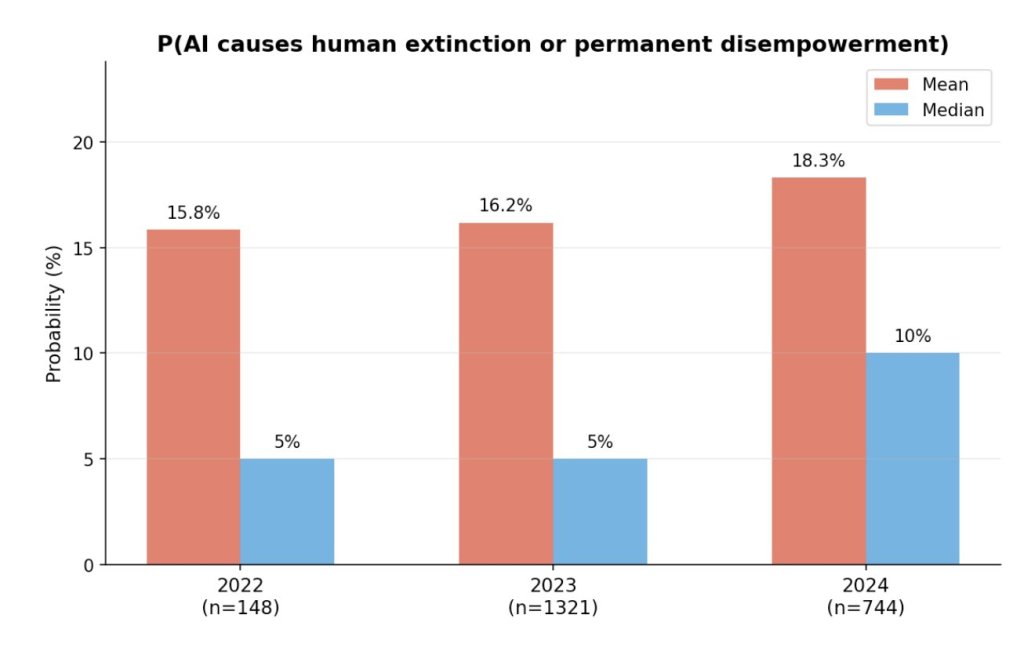
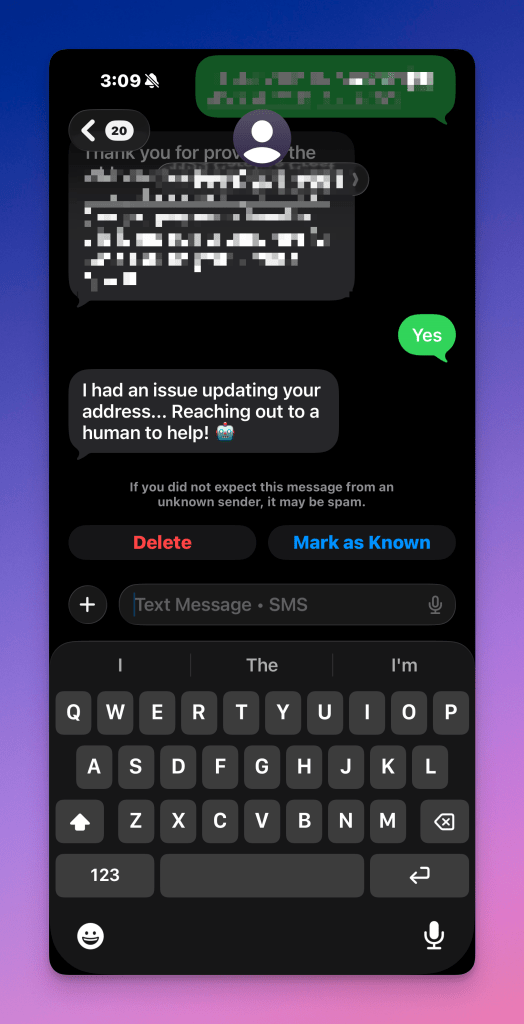
The cool thing right now seems to be to tell the world you are reducing headcount because of AI, regardless of the reason. Although not a recent development, it’s picking up steam. There’s even a term for it, “AI washing.” Although this term began life as a reference to products and services, it’s now right at home in companies’ layoff messaging. The future is bright 😎
There is no doubt that AI is having an impact on the job market, but not necessarily for the reasons people think. It’s not due to massive gains from deploying AI technology, but because of something far simpler, the mere idea of AI.
Before We Start
I try to keep my information diet balanced. As such, I follow a cavalcade of haters and AI hype bros. In this group, some people think LLMs will disappear. For example, if the AI investment bubble pops, LLMs will evaporate, much like the metaverse did. This perspective demonstrates a fundamental misunderstanding of realities on the ground.
Generative AI is seeing some success across various use cases. Two examples are cybersecurity and software development. Sure, the amount of success and the extent to which these use cases can be driven are open to speculation, but denying they exist is delusional. LLMs don’t need to be AGI to be useful. Hell, they can even be kind of bad at something and still be useful as long as you understand the capabilities and limitations.
The disconnect people see is the undertone of the marketing, which casts it as a complete labor-saving device rather than a productivity tool. This is partly what we’ll look at in this article.
Oh, and I’d say the metaverse is down, but not out. Never underestimate people’s desire not to live in reality. It will be back at some point. Now on to AI washing.
Not only is he doing it, but he sees most companies doing the same next year. The issue being he’s not the first. Many tech companies overhired during the pandemic, and they’ve already reduced headcount, specifically Meta and Amazon.
The AI washing of layoffs is something that Sam Altman himself acknowledges, and he specifically uses the term in relation to layoffs when speaking at a recent summit. However, Sam Altman disingenuously uses the term “blame” when he says, “Almost every company that does layoffs is blaming AI, whether or not it really is about AI.”
Business leaders aren’t “blaming” AI for layoffs. They are praising it. Celebrating it even. There’s a pretty wide gap between blame and celebration. In much the same way I celebrate my birthday, I don’t blame my parents for the fact that I have one.
Altman strategically uses the word “blame” here because he’s attempting to rework AI’s image in the face of growing backlash. This is a manipulation. Everyone needs to remain vigilant against these manipulations in our current era. However, I love how Altman goes right back to spouting abundance nonsense, always on-brand.
AI Washing: Performance Art Yields Rewards
Telling the world you are laying people off because of over-hiring, your financials are down, you expect an uncertain market, increased competition, or any number of other factors would cause your stock to drop. Pretty much the only positive way to frame layoffs these days is to say that it’s because of AI.
When you say it’s because of AI, you are sending a positive signal to the market. You are saying, “We didn’t cut headcount; we gained efficiency.” We are now set up to reduce even more headcount in the future, which translates into greater potential profit for investors. Reality has no business here. As I’ve said before, much of this is performance art for investors, and the performances are paying off. Throwing AI in front of layoffs works… for now. Block shares surged after the announcement.
And we are back to Meta again as they consider cutting 20% of their workforce because AI is so capable right now. I’m joking, of course, they’ve made some terrible AI investments (and hires), and investors aren’t happy. But they are happier now that they are considering laying off 20% of their workforce.
However, it’s not working out so well for Oracle. Oracle’s situation is playing out more realistically. They overspent and then needed to cut jobs to cut costs. This could be more difficult for them to reframe because so much is publicly known about their data center project and their relationship with OpenAI.
Are you sensing a trend yet? Whether AI actually works and replaces staff is irrelevant. More companies will see this and follow suit. AI will be attributed to every layoff from here on out. Even non-publicly traded companies will follow, seeing a more positive framing, even if it doesn’t work out in the end.
The Idea of AI
AI is coming for jobs, but not before the mere idea of AI does. There are people right now either getting laid off or not getting new opportunities, not because of AI’s capabilities, but because of the mere thought of AI doing their jobs in the future. Companies are betting their future on the hype that AI companies are pitching. This is like jumping off of a perfectly good boat in the middle of the ocean because some dudes on the internet claim a better boat is coming soon.
Even if companies aren’t laying people off because of AI, they are certainly slow to open new positions, hoping that AI will alleviate the need. This places more work on the shoulders of current employees, intensifying their workload rather than reducing it.
Look, I’m not delusional. There is no doubt that AI is having some impact on the labor market. How much impact and the reason are hard to decipher. It’s difficult to distinguish decisions made between true capabilities and pure hope. In some cases, where it would seem to impact certain jobs more negatively, the opposite happens. For example, instead of hiring fewer developers, companies are hiring more.
Generative AI models are great at generating initial code. However, it remains to be seen how these tools fare in maintenance over time, especially for larger, more complex codebases. There’s reason to believe it won’t work out as well as people hoped. In a way, we get a glimpse of what could be, but still isn’t. Companies are hoping this gap closes.
However, the hype catches fire because many business leaders have no idea how the technology works. They read news articles, many of which are nonsense, and then assume everyone is doing something except for them. So, they force-feed half-baked technology to everyone at the company and delay hiring in the hope that AI swoops in as a savior.
Layoffs Are The Point
Even if the current spate of layoffs is mostly AI washing, it should be noted that the total reduction of staff with AI is the point. Even if the business leaders won’t admit it, the influencers certainly do. If you ask them, they’ll tell you that the ideal number of employees at a company is zero. This can be accomplished with a far less-than-perfect AI technology.
The pseudo-utopian sales pitch is that the goal of AI in the workplace is to reduce workload, freeing people up to focus on more meaningful and creative tasks. This pitch was always 100% bullshit. The goal of AI in the workplace isn’t to reduce workload. You don’t think people are dumping billions upon billions in investment into AI because it’s a productivity booster, do you?
The famous saying, “AI won’t replace people. People with AI will replace those without,” was always silly. I’ve been saying for years that we don’t need AGI for companies to replace workers. The moment the AI is mediocre enough to pass muster, it will be adopted. Bugs, errors, issues, vulnerabilities, and all. Period. Doesn’t matter if the person has AI or not.
What we are seeing is a dress rehearsal for how a more capable AI offering would unfold. Businesses would replace people as fast as they could. We are already on the precipice of people falling into what I call the “Sucks to be you gap,” a condition in which workers are displaced from the workforce by AI with no alternatives and no support. The sad thing is, they may fall into this gap not because of legitimate AI capabilities, but because of the mere idea of AI.
The Negative Consequences
There are plenty of trade-offs in replacing employees with today’s AI tools, as well as the misconception that we are one iteration away from complete success. As usual, what shouldn’t be surprising to anyone is apparently mind-blowing.
First of all, organizations are cutting headcount, leaving fewer people, and AI doesn’t replace their jobs. So you have fewer people doing more, even with AI tools. This is leading to a kind of AI burnout being labeled “brain fry.” This isn’t sustainable or productive. Most companies are already efficient and can limp along for a bit after drastic cuts, but it catches up with them quickly after a few quarters or even a year. In the long run, these short-term gains turn into long-term losses.
AI adoption over human talent can lead to stagnation. This may seem counterintuitive, but LLMs don’t generate novel ideas. The tools contain a mishmash of already known things. This is like expecting an industrial robot on an assembly line to come up with a new way of working. Humans are where true creativity and novelty still exist, and after cuts, companies may be missing the very people who can move the business forward. Most modern organizations aren’t like factories, but making them more like a factory could be a recipe for disaster.
From a human perspective, an AI-powered organization is fairly uninspiring. So your best people don’t stick around, and attracting new talent may become problematic. Imagine telling someone that their job will mostly be managing a fleet of AI agents. Super fun! Especially since that implies the technological equivalent of a janitor. They wouldn’t be exploring or creating, they’d be cleaning up.
In many cases, companies would be reducing the quality of the products and services they offer. Moving fast, vibe coding, replacing people with agents that have errors, and many other cases cause a degradation in delivery. I’ve written about this before… back in 2023. Companies are running face-first into a wall of technical debt.
For all the talk about competition with China and the EU, it seems our US tech companies may be putting themselves at a disadvantage in pursuit of short-term balance-sheet wins. The sentiment of US tech companies is at an all-time low as countries around the world scramble for alternatives. This will be a space to watch over the next couple of years to see how much damage it causes.
Of course, a huge issue with the public praising of AI as the reason for layoffs is the massive negative sentiment it engenders. The AI backlash is only going to get a lot worse. Please, everyone, Sam Altman can’t handle this much backlash on his own. 😆
At Some Point
At some point, a technology will come along that delivers on all of the promises the AI companies are making. Call it AGI or whatever. The real questions are, will it be built atop LLMs, and how soon will this arrive? Despite their usefulness for specific tasks, I personally don’t think LLMs are the technology to deliver on these promises, though many people disagree. Fair enough.
As far as timing goes, I don’t have a good read on this, and anyone who claims otherwise is full of it and drinking marketing Kool-Aid. If I had to speculate, I think another 15 or 20 years, to which every AI bro on the planet just collapsed on the floor laughing. The running claim in tech circles is 12 to 18 months (it’s always 12 to 18 months), but I believe a reckoning is coming that the AI bros fail to recognize. I’m not saying that AI won’t have an impact on jobs during this time. I’m talking about major employment disruption and workforce displacement due to AI.
I believe that at some point, there will be a significant setback. A reset will cause a reckoning. The buildup of technical debt, the degradation of service, the brain drain from companies, stagnation, the bursting of the AI investment bubble, AI data center sunken cost, or any number or combination of factors will cause a reset. As companies try to reset themselves, competitors without this baggage will swoop in to steal market share, further damaging the organization. It could lead to a situation in which smaller, more agile organizations overtake large competitors.
This may happen because the company spent so much time reworking things for AI that it’s not working for humans. You can certainly do both, but that’s not what companies are doing right now.
And no, LLMs won’t go away. If that’s what you were hoping for, I have bad news for you. Beyond the use cases and tools where LLMs are genuinely useful, LLMs have become a comfort blanket for people. You’ll have to pry it out of their cold, dead hands.
Conclusion
AI washing is here to stay, and pretty much every future layoff announcement will be framed as AI-related. This trend will continue until something breaks. One thing is for sure: the next year is gonna be wild.
Social media is flooded with the same hot take: software is dead! Yup, that’s right, the world runs on software, but applications are either in the grave or the ICU with the cardiac monitor flatlining. It only takes a modicum of reflection to see through this illusion. But our modern world rewards reaction, not reflection, so everyone reacts. This is fueled by the fact that many tech journalists have abdicated their responsibility, leaving us with a world where people are consuming the equivalent of digital bath salts. Are we witnessing the death of software? Let’s find out.
Everyone Is Saying Software Is Dead
The new hotness to spout the phrase “software is dead.” Everyone is doing it. If you close your eyes and pretend to live in a fantasy world with unicorns and sorcerers, it almost makes sense. Unfortunately, in our modern world, a basis in reality is not a prerequisite for making an impact.
Over a week ago, the stock market began taking a major haircut on software stocks, with a one-day loss of 285 billion. This was dubbed the SaaSpocalpyse. It seems investors aren’t sure whether software products will exist in the future, and the AI bros are hyped. Honestly, when are the AI bros not hyped? Investors are convinced that, in the future, people will build their own software rather than purchase it. So long, SAP and Salesforce! You had a good run. If this were true, it would be a major shift, since the world runs on software. But as usual, this is mostly stoked by cluelessness and perverse incentives.
Here is the creator of OpenClaw saying that 80% of apps will disappear.
That’s right: reach for number, pull directly out of ass. His reasoning is fascinating, since he recycles the same tired examples we’ve heard for years: making a restaurant reservation. Which I’m pretty sure we have the technology to do today. Seriously, the guy built this viral agent with claims of transforming the world, and dinner reservations are the best he’s got? However, I do like the dystopian twist of having your agent get a human to stand in line for you.
Sam Altman thinks this guy is a genius. Just goes to show you how absolutely desperate OpenAI is. That Anthropic Super Bowl commercial really hurt him.
Not to be outdone, here’s Mustafa Suleyman pivoting this into an AGI prediction. Just when you thought we were done with the term AGI for a while, it’s back stronger than ever. He’s predicting “professional-grade AGI” in the next 12 to 18 months.
Hmmm. Why are these predictions always 12 to 18 months? It’s always 12 to 18 months because that’s long enough to generate hype that fuels investment and cannot be checked in the short term. It’s also long enough for people to forget the prediction.
At this point, it’s fair to assume the tech press has abdicated all responsibility. They just mindlessly parrot this nonsense without any questioning or due diligence. They repeat these statements knowing full well that hype is in their best interest.
And then there are all of the countless attention-mongering influencers selling their own unique brand of horseshit. Like this guy.
By the way, these people follow a familiar pattern to manipulate viewers. First, they make some dumb look on their faces with a clickbait headline, which psychology says increases the likelihood that people will click. Then they lay the foundation by stating some history or facts. By stating these up front, they lower your defenses and critical thinking skills, since the facts and foundation appear to give them credibility. This is followed by their own unique brand of nonsense that follows.
Here’s another rando agreeing with… checks notes… Mark Cuban? Well, both Mark Cuban and this person are dead wrong. The next decade belongs to security professionals because this technology is insanely insecure. More on this later. However, I do love the pitch that this dude is going to save your business with a single Mac mini and OpenClaw. Bold.
These claims are nothing but a combination of clueless ramblings and pure unadulterated bullshit. This doesn’t bode well if your goal is to align with reality.
The Software Environment
Let’s first define what we mean by “software” in this context. By software, we mean software that you purchase from a vendor or a SaaS (Software as a Service) solution you subscribe to. This could be everything from simple apps you purchase on the App Store to large enterprise applications like SAP.
So, what’s the claim? In short, the claim is that people and companies will stop buying software because they can just use AI to build it themselves.
There’s no doubt that tools like ClaudeCode and Codex are getting quite good. Many people are discovering software for the first time, writing what could be described as more elaborate examples of “Hello, World!” programs. Some may claim this is a disingenuous comparison because “Hello, World!” Programs merely print the words, Hello, World! and some of the things that people are building actually perform some task or tasks. Fair enough.
I’d argue that these still represent Hello, World! applications because the people developing them have little understanding of the language and mechanics. The difference from a simple Hello World is that nobody writing one of these simple programs would say they were an expert in the language because they wrote one. However, now we have Hello, World! applications powered by Dunning–Kruger.
However, now we have Hello, World! applications powered by Dunning–Kruger.
The ease with which these tools create apparently working code has fooled many people. I mean, here are some folks from CNBC who know nothing about programming blowing their own minds.
The fact that they don’t know anything about software engineering is precisely the point. It’s the same kind of leap people made when they asked ChatGPT for a recipe in the style of Shakespeare and said that LLMs were more impactful on humanity than the printing press.
But to avoid any confusion, let me acknowledge a couple of things. One-off software and scripts can be incredibly useful. Also, experienced developers are finding LLMs useful in their development process too. So, I’m not claiming tools like ClaudeCode or Codex are useless or have no value in the software development lifecycle. I’m not even claiming that vibe coding is useless, especially for rapid prototyping. My point is that reality still exists, and reality is what’s constraining in this context. Much of what we are seeing is people just playing with toys.
Much of what we are seeing is people just playing with toys.
When it comes to individuals building their own software for personal use, I think tech people are in a bit of a bubble. For example, here is a statement I read from Andrej Karpathy this morning.
TLDR the "app store" of a set of discrete apps that you choose from is an increasingly outdated concept all by itself. The future are services of AI-native sensors & actuators orchestrated via LLM glue into highly custom, ephemeral apps. It's just not here yet.
Having a world of composable pieces scattered across the digital landscape, requiring users to connect and use them, is not the dream for end users. They don’t want ephemeral software that they have to construct themselves and then figure out how to host or run. They just want software that just works. Some people enjoy tinkering with software, while most people don’t. Just like some people enjoy tinkering with cars and changing their own oil, while most people don’t. The same could be said of IKEA furniture. However, at least with IKEA furniture, you get directions, not “Here’s a bunch of stuff, you figure it out.”
The Death of Software?
Given this, will software disappear? Of course not. There are many reasons for this, and it takes only a moment of reflection to surface. First of all, nobody is going to vibe code or gen smash Salesforce or SAP. This is true no matter how good the tools become. Development requires much more than just a UI, some simple functionality, and a few prayers.
Software engineering is a lot more than simply writing code. There is architectural work, debugging, feature enhancements, improvements, hosting, and more. There is also the human aspect of translating users’ requests into real features that meet their needs. It’s more than just copying what someone else did. Not to mention, there is value in incorporating other people’s inputs into a product. Other people from other companies, which you wouldn’t get by developing internally.
But ultimately, how much effort is someone willing to expend to save $10 a month? Are you really saving $10 a month in the end? Say it takes you $1000 to vibe code the application and a week of time squashing bugs. Now, you feel like you’ve begun to save money. Even if that were the end of the story, it would still take years to recoup your costs, and you’ve created a bunch of technical debt on day one that nobody is focused on fixing. While development and features continue to be added to the app you were using, they aren’t added to the application you created.
The impression that software is built and forgotten, like one-off applications, is a myth. This is especially true for enterprise applications. There is an ongoing process for updates and maintenance. Many have no idea how complex this becomes when no one knows what’s happening inside an application. Like what happens when you use AI to build the apps. This gets even more complex when the app itself also uses AI as part of its functionality. Creating conditions where nobody knows what code is going to execute at runtime. I’ve pointed this condition out before.
There’s no evidence that these tools can create robust applications over time as feature, functionality, and bug-fix needs arise. Imagine waking up one day to the enterprise applications you count on to make money not working, you don’t know why, and your human team doesn’t know why, and your AI agent doesn’t know why. All so you could save $10 a month.
There’s also a bit of a mirage here that software disappears with new workflows, when the opposite happens. Let’s take the OpenClaw dude and his example of using your agent to book you a reservation at a restaurant. You use your agent, but your agent may use a service like OpenTable to book a reservation for you. This doesn’t remove OpenTable; instead, OpenTable becomes middleware. In many of these cases, old applications become middleware and remain in place. So, more code, not less.
In many of these cases, old applications become middleware and remain in place.
For many, the issues I’m calling out are obvious. But here’s something not so obvious. Companies can’t operate properly when everyone has conflicting insights from the same data. This creates disorganization and leads to poor business decisions. When everyone is building their own apps, there’s a risk that the same data is interpreted in conflicting ways.
As far as success goes, on a small scale, with simple applications, it’s very possible that people could build their own applications with AI tools. Let’s consider the humble Pomodoro Timer. Building a simple application to count off 25-minute increments would be relatively simple. However, you can find these applications for free, and even the ones that cost money are like $1.99 for an app that adds functionality and runs in your computer’s taskbar. So, although possible, it may not be practical. There’s always a cost vs. effort trade-off.
There have been some genuinely cool examples, too. Like Nicholas Carlini, who built a C compiler in Rust. From the page:
I tasked 16 agents with writing a Rust-based C compiler, from scratch, capable of compiling the Linux kernel. Over nearly 2,000 Claude Code sessions and $20,000 in API costs, the agent team produced a 100,000-line compiler that can build Linux 6.9 on x86, ARM, and RISC-V.
This isn’t some simple vibe coding example, and it’s impressive that we have tools to generate this today. However, even this cool example isn’t without its flaws, and that’s kind of the point of this post.
And of course, there will be outliers, too. I’m not claiming that using AI to develop alternatives is somehow impossible. It’s certainly possible, but what we are asking is whether it’s practical or well-advised. There will undoubtedly be companies that demonstrate how they saved money by developing their own in-house alternatives. This may happen in very specialized situations for very specific tasks, but the mistake is assuming these outliers are the norm. AI bros love to point to outliers as proof to justify their perspectives. Don’t fall for it. The question here is, does this happen at scale? Which I believe is highly unlikely.
Keep in mind that the world and the use cases to which software is applied are highly complex. So many unforeseen circumstances surface when applying software to problems.
100% Chance Of Vulnerabilities
No matter what happens, I can say with 100% certainty that software vulnerabilities will be everywhere, from code generated by coding agents to the generative AI functionality built into applications. This is regardless of the success of applying coding agents and vibe coding.
Security is the cost of this spray-and-pray style of development. We never solved the problem with developers introducing vulnerabilities into software, and now we are encouraging everyone to be a developer using tools they don’t understand, creating more code than ever. This was a condition I called out before with the introduction of Copilot apps.
To summarize, we now have tools that people configure insecurely, introduce vulnerabilities into code, apply them to insecure architectures, and create outputs that the creators don’t understand. What could possibly go wrong? We will have a patchwork of vulnerable applications, which means anyone with minimal knowledge can manipulate the systems in unexpected ways.
The Other Side
So, what would my detractors say? First of all, they would tell you not to believe me because I just don’t love AI enough. Which is a very cryptocurrency way of dealing with criticism that makes no point whatsoever.
They may also claim that I don’t understand the current moment. To this, I’d say they are confused and possibly trapped in a filter bubble. They are extrapolating capabilities from simple functionality. We aren’t there yet, to which they’d reply, “Soon.”
Finally, they will claim that AI will just figure it out. This perspective treats AI far more like a magic wand than a technology. AI really hasn’t been figuring it out in the past few years. We haven’t solved any of the major issues with the technology, such as hallucinations and prompt injection. We’ve just been getting products that pretend these issues don’t exist.
At some point, we’ll have technology capable of doing all the things these people claim, but not soon, and probably not built on top of Generative AI. Admittedly, this is speculation on my part, but at least it’s speculation based on observation.
In short, these aren’t easy problems to solve. Otherwise, they’d be solved already.
Conclusion
It’s certainly possible that I’m wrong, and we see GenAI crush software. The world is an uncertain place, and sometimes innovations have a moment and snap into place. However, I wouldn’t run to Polymarket with this bet. Success would require much of the world’s complexity to evaporate. Enterprise software engineering is far more complex than people building simple tools give it credit for. My guess is that SAP and Salesforce will still be with us five years from now, barring idiotic business decisions. The death of software is greatly exaggerated.
People making predictions fall into three general camps: those selling something, delusional ignoramuses, and the rare case of thoughtful reflectors. I’d like to think I fall into the last category, but since I’m not selling anything, I fear I may be part of the former. Regardless of category, we seem to forget that the world confounds prediction through complexity, even for the most ardent of reflectors.
Another common playbook in our era is to make so many predictions that some are bound to come true, then cite those cases as proof that you are an oracle. I see this happening frequently. It’s the exploitation of our short attention spans. This isn’t magical foresight, it’s statistics.
Regardless of my opinion on tech predictions, people seem to love hearing them. While I was at the AI Security Summit in London, several people asked me for my predictions for 2026, since in my keynote, I described hype shifting back to embodied systems. I guess I asked for it. But, please don’t listen to me or anyone else making predictions about 2026. Well, at least I’m not trying to sell you anything.
I think people have an instinct that 2026 feels more uncertain than 2025. There is a sense of desperation in the air as companies push to prove there is no AI bubble by wallpapering everything with AI.
Now that I’ve complained about making predictions and how uncertain 2026 feels, here are my predictions/vibes/observations for 2026.
1. Agent Double Down
“No, no. Last year wasn’t the year of the agent. THIS year is going to be the year of the agent.” I can already hear people course-correcting from their predictions last year. 2025 was the year generative AI was going to take off, resulting in massive layoffs and tons of revenue. Instead, we hear speculation about the AI bubble about to pop.
Despite the ongoing issues and high manipulability of agents, people will continue to double down. We didn’t resolve any issues with agents in 2025, so they’ll be with us again in 2026. But with the doubling-down efforts, people will try to convince you that the issues are solved or didn’t matter much in the first place.
Most business leaders who ask for agents and insist on using AI have no idea how the technology works, what it’s capable of, or the associated risks. This is not a recipe for success. Deploying this technology successfully requires a firm understanding of capabilities and realities on the ground. Of course, having appropriate expectations helps too. This isn’t happening, as MIT found when they identified that 95% of GenAI pilots failed.
I’m not claiming that agents are useless. They have their uses and can be employed in certain scenarios to augment human activities. And yes, this can be done successfully. What I’m saying is, they aren’t the utopian, headcount-reducing technology we were promised in 2025, and the data bears this out.
The truth is, if your use case has a low cost of failure and can tolerate errors and manipulations, you don’t need to wait for a new innovation. You can deploy agents today. How well they perform, on the other hand, is a different story. Performance will vary by use case and environment.
2. Embodiment Hypes Again
Although the hype of generative AI will continue in 2026, we’ll see much more hype of embodied systems. Embodied systems are those that interact and learn from the real world. Think robots, self-driving cars, drones, etc. This category is certainly no stranger to hype.
Embodied systems are always ripe for hype because they tend to be more tangible and less behind-the-scenes. There will undoubtedly be some real improvements in this area. Unfortunately, these real improvements will provide ammunition for the hype cannon. Any modest improvement will be pointed to as exponential. For example, Elon Musk recently said robots wouldn’t just end poverty, but also make everyone rich. Utopian abundance is often talked about but never rationally explained.
3. Security Issues Continue To Rise
Security issues will not only persist but also accelerate. How can they not? With more AI writing more code and more code being pushed by inexperienced people, that’s a recipe for security issues. But to quote the late American philosopher Billy Mays, “But wait, there’s more!” As more applications are developed to outsource functional components to generative AI, the application itself becomes highly vulnerable.
Unknowns will continue to plague applications and products, leading to security issues. If you’ve seen any of my conference presentations over the past couple of years, you’ll have heard me talk about these unknowns. For example, we now have conditions in which developers don’t know what code will execute at runtime.
We security professionals aren’t doing ourselves any favors. Much of the guidance on AI security is overly complex, doesn’t align with real-world use cases, and doesn’t help organizations realize value quickly. We are not rising to the occasion.
4. AI Backlash Builds
AI backlash will continue to build in 2026. A vast majority of people on the planet find tech bros abhorrent. Talking about technology as if it’s magic and CEOs foaming at the mouth to replace people leaves a bad taste in the mouth. Also, the shoving AI into every possible crevice of our existence isn’t a condition that a vast majority of people want. We are getting AI in everything, whether we want it or not.
2026 will be a challenging year for tech companies. They have to prove their investments are paying off. As we enter the fourth year of the generative AI craze, companies are still hemorrhaging money. This will lead to more intense claims, hype, and AI in everything. Backlash will certainly result. As to what form this backlash takes or how big it becomes, it’s anyone’s guess.
5. Negative Human Impacts Gain More Attention
When you mention the topic of AI’s negative impacts on humans, people almost universally think of job displacement. However, this isn’t even the most impactful effect on humans. The human impacts of AI have been a focus of mine for years. This is the main focus of Perilous.tech where I’ve covered topics such as cognitive atrophy, skills decline, devaluation, dehumanization, and on and on.
I believe more people are recognizing the human impacts of AI, and it will receive far more attention in 2026. Today, the most extreme examples, such as people committing suicide or AI psychosis, get all of the attention, but this is starting to shift.
I recently saw Jonathan Haidt mention these cognitive and developmental issues, referencing both Idiocracy and The Matrix. Two references I’ve also made in the past couple of years. These are natural conclusions once you consider the facts on the ground. AI can make you stupid and overconfident in an environment that seems like it’s already saturated with stupid and overconfident people.
6. OpenAI’s Device Flops
OpenAI is working on a device, and it’s going to be the most world-changing thing ever. It will demonstrate that OpenAI absolutely has a moat. After all, they’ve hired Johnny Ive! You sense my sarcasm.
I’m not sure what form OpenAI’s device will take or even if it will be launched in 2026, but it’s rumored to be a small, screenless device with a microphone and camera. This road has been traveled before, a couple of examples are the Humane pin and the 01 light. These devices failed for the same reason OpenAI’s will. It’s not that these devices lacked capabilities, it’s that they directly conflicted with culture. We have a screen-based culture, and now OpenAI expects people to give up the screens? No chance.
People are accustomed to having their experiences mediated, and screens are a large part of that. There’s an idealized vision that people will wear these devices and use them to make sense of the world. Unfortunately, in our current culture, people aren’t curious about the world or look at it with a sense of wonder. They want to transform the world into content. Everyone on the planet now has camera eye, and nobody is going to trust a wearable to frame content.
The device will also be visible to others, so it will signal something about you as a person, and what it signals is nothing good. In addition, if the device has a microphone and camera, public shaming will further lead people to either abandon it or avoid purchasing it altogether, regardless of its functionality.
There’s also the verification aspect. People have become accustomed to degraded tech performance, and they will just not want to talk to their neck and hope that the device takes some action on their behalf. They’ll want to verify.
Remember the GPT Store? Yeah, nobody else does either, including the influencers who claimed it was the new AppStore. We’ll get overwhelming hype followed by a belly flop the size of the US economy, regardless of whether the device is launched in 2026 or 2027.
Conclusion
Buckle up, we aren’t through the hype yet. We are in an era where faith in gods is replaced by faith in tech, and people can gamble on the mundane aspects of daily life. 2026 is going to be weird.
AI security is a hot topic in the world of cybersecurity. If you don’t believe me, a brief glance at LinkedIn uncovers that everyone is an AI security expert now. This is why we end up with overly complex and sometimes nonsensical recommendations regarding the topic. But in the bustling market of thought leadership and job updates, we’ve seemed to have lost the plot. In most cases, it’s not AI security at all, but something else.
Misnomer of AI Security: It’s Security From AI
I recently delivered the keynote at the c0c0n cybersecurity and hacking conference in India. It was truly an amazing experience. One of my takeaways was encouraging a shift in perspective on the term “AI Security,” highlighting how we often approach this topic from the wrong angle.
The term “AI Security” has become a misnomer in the age of generative AI. In most cases, we really mean securing the application or use case from the effects of adding AI. This makes sense because adding AI to a previously robust application makes it vulnerable.
In most cases, we really mean securing the application or use case from the effects of adding AI.
For most AI-powered applications, the AI component isn’t the end target, but a manipulation or entry point. This is especially true for things like agents. An attacker manipulates the AI component to achieve a goal, such as accessing sensitive data or triggering unintended outcomes. Consider this like social engineering a human as part of an attack. The human isn’t the end goal for the attacker. The goal is to get the human to act on the attacker’s behalf. Thinking this way transforms the AI feature into an actor in the environment rather than a traditional software component.
There are certainly exceptions, such as with products like ChatGPT, where guardrails prevent the return of certain types of content that an attacker may want to access. An attacker may seek to bypass these guardrails to return that content, making the model implementation itself the target. Alternatively, in another scenario, an attacker may want to poison the model to affect its outcomes or other applications that implement the poisoned model. Conditions like these exist, but are dwarfed in scale by the security from AI scenarios.
Once we start thinking this way, it makes a lot of sense. We shift to the mindset of protecting the application rather than focusing on the AI component.
AI Increases Attack Surface
Another thing to consider is that adding AI to an application increases the attack surface. Increase in attack surface manifests in two ways: first, functionally through the inclusion of the AI component itself. The AI component creates a manipulation and potential access point that an attacker can utilize to gain further access or create downstream negative impacts.
Second, current trendy AI approaches encourage poor security practices. Consider practices like combining data, such as integrating sensitive, non-sensitive, internal, and external data to create context for generative AI. This creates a new high-value target and is a poor practice that we’ve known from decades of information security guidance.
Also, we have trends where developers take user input, request code at runtime, and slap it into something like a Python exec(). This not only creates conditions ripe for remote code execution but also a trend where developers don’t know what code will execute at runtime.
Vulnerabilities caused by applying AI to applications don’t care whether we are an attacker or a defender. They affect applications equally. This runs from the AI-powered travel agent to our new fancy AI-powered SOC. Diamonds are forever, and AI vulns are for everyone.
It’s Simpler Than It Seems
Here’s a secret. In the real world, most AI security is just application and product security. AI models and functionality do nothing on their own. They must be put in an application and utilized in a use case, where risks materialize. It’s not like AI came along and suddenly made things like access control and isolation irrelevant. Instead, controls like these became more important than ever, providing critical control over unintended consequences. Oddly enough, we seem to relearn this lesson with every new emerging technology.
In the real world, most AI security is just application and product security.
The downside is that without these programs in place, organizations will accelerate vulnerabilities into production. Not only will they increase their vulnerabilities, but they’ll be less able to address them properly when vulnerabilities are identified. Trust me, this isn’t the increase in velocity we’re looking for.
I’ve been disappointed at much of the AI security guidance, which seems to disregard things like risk and likelihood of attack in favor of overly complex steps and unrealistic guidance. We security professionals aren’t doing ourselves any favors with this stuff. We should be working to simplify, but instead, we are making things more complex.
It can seem counterintuitive to assume that something a developer purposefully implements into an application is a threat, but that’s exactly what we need to do. When designing applications, we need to consider the AI components as potential malicious actors or, at the very least, error-prone actors. Thinking this way shifts the perspective for defending applications towards architectural controls and mitigations rather than relying on detecting and preventing specific attacks. So much focus right now is on detection and prevention of prompt injection, and it isn’t getting us anywhere, and apps are still getting owned.
I’m not saying detection and prevention don’t play a role in the security strategy. I’m saying they shouldn’t be relied upon. We make different design choices when we assume our application can be compromised or can malfunction. There are also conversations about whether security vulnerabilities in AI applications are features or bugs, allowing them to persist in systems. While the battle rages on, applications remain vulnerable. We need to protect ourselves.
There is no silver bullet, and even doing the right things sometimes isn’t enough to avoid negative impacts. But if we want to deploy generative AI-based applications as securely as possible, then we must defend them as though they can be exploited. We can dance like nobody is watching, but people will discover our vulnerabilities. Defend accordingly.
The past couple of years have been fueled entirely by vibes. Awash with nonsensical predictions and messianic claims that AI has come to deliver us from our tortured existence. Starting shortly after the launch of ChatGPT, internet prophets have claimed that we are merely six months away from major impacts and accompanying unemployment. GPT-5 was going to be AGI, all jobs would be lost, and nothing for humans to do except sit around and post slop to social media. This nonsense litters the digital landscape, and instead of shaming the litterers, we migrate to a new spot with complete amnesia and let the littering continue.
Pushing back against the hype has been a lonely position for the past few years. Thankfully, it’s not so lonely anymore, as people build resilience to AI hype and bullshit. Still, the damage is already done in many cases, and hypesters continue to hype. It’s also not uncommon for people to be consumed by sunk costs or oblivious to simple solutions. So, the dumpster fire rodeo continues.
Security and Generative AI Excitement
Anyone in the security game for a while knows the old business vs security battle. When security risks conflict with a company’s revenue-generating (or about to be revenue-generating) products, security will almost always lose. Companies will deploy products even with existing security issues if they feel the benefits (like profits) outweigh the risks. Fair enough, this is known to us, but there’s something new now.
What we’ve learned over the past couple of years is that companies will often plunge vulnerable and error-prone software deep into systems without even having a clear use case or a specific problem to solve. This is new because it involves all risk with potentially no reward. These companies are hoping that users define a use case for them, creating solutions in search of problems.
What we’ve learned over the past couple of years is that companies will often plunge vulnerable and error-prone software deep into systems without even having a clear use case or a specific problem to solve.
I’m not referring to the usage of tools like ChatGPT, Claude, or any of the countless other chatbot services here. What I’m referring to is the deep integration of these tools into critical components of the operating system, web browser, or cloud environments. I’m thinking of tools like Microsoft’s Recall, OpenAI’s Operator, Claude Computer Use, Perplexity’s Comet browser, and a host of other similar tools. Of course, this also extends to critical components in software that companies develop and deploy.
At this point, you may be wondering why companies choose to expose themselves and their users to so much risk. The answer is quite simple, because they can. Ultimately, these tools are burnouts for investors. These tools don’t need to solve any specific problem, and their deep integration is used to demonstrate “progress” to investors.
I’ve written before about the point when the capabilities of a technology can’t go wide, it goes deep. Well, this is about as deep as it gets. These tools expose an unprecedented attack surface and often violate security models that are designed to keep systems and users safe. I know what you are thinking, what do you mean, these tools don’t have a use case? You can use them for… and also ah…
The Vacation Agent???
The killer use case that’s been proposed for these systems and parroted over and over is the vacation agent. A use case that could only be devised by an alien from a faraway planet who doesn’t understand the concept of what a vacation is. As the concept goes, these agents will learn about you from your activity and preferences. When it’s time to take a vacation, the agent will automatically find locations you might like, activities you may enjoy, suitable transportation, and appropriate days, and shop for the best deals. Based on this information, it automatically books this vacation for you. Who wouldn’t want that? Well, other than absolutely everyone.
What this alien species misses is the obvious fact that researching locations and activities is part of the fun of a vacation! Vacations are a precious resource for most people, and planning activities is part of the fun of looking forward to a vacation. Even the non-vacation aspect of searching for the cheapest flight is far from a tedious activity, thanks to the numerous online tools dedicated to this task. Most people don’t want to one-shot a vacation when the activity removes value, and the potential for issues increases drastically.
But, I Needed NFTs Too
Despite this lack of obvious use cases, people continue to tell me that I need these deeply integrated tools connected to all my stuff and that they are essential to my future. Well, people also told me I needed NFTs, too. I was told NFTs were the future of art, and I’d better get on board or be left behind, living in the past, enjoying physical art like a loser. But NFTs were never about art, or even value. They were a form of in-group signaling. When I asked NFT collectors what value they got from them, they clearly stated it wasn’t about art. They’d tell me how they used their NFT ownership as an invitation to private parties at conferences and such. So, fair enough, there was some utility there.
In the end, NFTs are safer than AI because they don’t really do anything other than make us look stupid. Generative AI deployed deeply throughout our systems can expose us to far more than ridicule, opening us up to attack, severe privacy violations, and a host of other compromises.
In a way, this public expression of look at me, I use AI for everything has become a new form of in-group signaling, but I don’t think this is the flex they think it is. In a way, these people believe this is an expression of preparation for the future, but it could very well be the opposite. The increase in cognitive offloading and the manufactured dependence is precisely what makes them vulnerable to the future.
In a way, these people believe this is an expression of preparation for the future, but it could very well be the opposite. The increase in cognitive offloading and the manufactured dependence is precisely what makes them vulnerable to the future.
Advice Over Reality
Social media is awash with countless people who continue to dispense advice, telling others that if you don’t deploy wonky, error-prone, and highly manipulable software deeply throughout your business, then they are going to be left behind. Strange advice since the reality is that most organizations aren’t reaping benefits from generative AI.
Here’s something to consider. Many of the people doling out this advice haven’t actually done the thing they are talking about or have any particular insight into the trend or problems to be solved. But it doesn’t end with business advice. This trend also extends to AI standards and recommendations, which are often developed at least in part by individuals with little or no experience in the topic. This results in overcomplicated guidance and recommendations that aren’t applicable in the real world.
The reason a majority of generative AI projects fail is due to several factors. Failing to select an appropriate use case, overlooking complexity and edge cases, disregarding costs, ignoring manipulation risks, holding unrealistic expectations, and a host of other issues are key drivers of project failure. Far too many organizations expect generative AI to act like AGI and allow them to shed human resources, but this isn’t a reality today.
LLMs have their use cases, and these use cases increase if the cost of failure is low. So, the lower the risk, the larger the number of use cases. Pretty logical. Like most technology, the value from generative AI comes from selective use, not blanket use. Not every problem is best solved non-deterministically.
Another thing I find surprising is that a vast majority of generative AI projects are never benchmarked against other approaches. Other approaches may be better suited to the task, more explainable, and far more performant. If I had to take a guess, I would guess that this number is close to 0.
Generative AI and The Dumpster Fire Rodeo
Despite the shift in attitude toward generative AI and the obvious evidence of its limitations, we still have instances of companies forcing their employees to use generative AI due to a preconceived notion of a productivity explosion. Once again, ChatGPT isn’t AGI. This do everything with generative AI approach extends beyond regular users to developers, and it is here that negative impacts increase.
I’ve referred to the current push to make every application generative AI-powered as the Dumpster Fire Rodeo. Companies are rapidly churning out vulnerable AI-powered applications. Relatively rare vulnerabilities, such as remote code execution, are increasingly common. Applications can regularly be talked into taking actions the developer didn’t intend, and users can manipulate their way into elevated privileges and gain access to sensitive data they shouldn’t have access to. Hence, the dumpster fire analogy. Of course, this also extends to the fact that application performance can worsen with the application of generative AI.
The generalized nature of generative AI means that the same system making critical decisions inside of your application is the same one that gives you recipes in the style of Shakespeare. There is a nearly unlimited number of undocumented protocols that an attacker can use to manipulate applications implementing generative AI, and these are often not taken into consideration when building and deploying the application. The dumpster fire continues. Yippee Ki-Yay.
Conclusion
Despite the obvious downsides, the dumpster fire rodeo is far from over. There’s too much money riding on it. The reckless nature with which people deploy generative AI deep into systems continues. Rather than identifying an actual problem and applying generative AI to an appropriate use case, companies choose to marinade everything in it, hoping that a problem emerges. This is far from a winning strategy. Companies should be mindful of the risks and choose the right use cases to ensure success.
Weaved through the fabric of the hustle-bro culture, threaded with the drivel of influencers, lies one of the biggest cons of our current age. This is the false perception that everything we do has to be for some financial gain or public attention. With everything in life revolving around social currency or actual currency, removing friction enables us to reach value quickly. But don’t fret. The slop dealer is here with a plan to deliver us salvation, telling us that ideas are what’s important and everything else is pointless friction, needing to be optimized to reach full potential. Like so many things in our current moment, if only this were true.
Despite the decline in excitement for AI and the potential resulting market corrections, unfortunately, slop is here to stay. Although people outwardly complain about it, they are secretly glad it’s here. Being unique, thoughtful, and creative is hard. Slop allows people to swaddle themselves in a false comfort devoid of any real creativity. So, damn the torpedoes, full slop ahead.
Slop, Enshittification, and Brain Rot
Slop, enshittification, and brain rot are terms burned into our current lexicon. Although each term has a different definition, one referring to outputs, one referring to platforms, and one referring to what it does to us. When I use the generalized term slop here, I mean a mixture of all three together, a sort of thick, rancid mixture reminiscent of manure and White Zinfandel. This is because the combined term aligns better with the content and its overall impact.
The Slop Dealer
The slop dealer tells us everything is a hustle, and we need to get on board to reduce friction everywhere we can to accelerate value or be left in the dust by others using AI. They don’t talk of reasonable AI usage or prescriptions for specific tasks; it’s all or nothing. We need to surrender to the higher power. The slop dealer embodies everything that tech bro culture stands for. It’s the current equivalent of a get-rich-quick scheme, only instead of taking our money, they are stealing our attention and our satisfaction. Although sometimes they take our money too.
The slop dealer swindles us by telling us what we want to hear, that hard things are a thing of the past, and all we need is an idea. After all, everybody has ideas. These are the influencers, wanna-be influencers, and other AI useful idiots vomiting nonsense on social media. They aren’t peddling secret knowledge; they are peddling bullshit.
This pandering is done so we’ll follow them, subscribe to their newsletters, or buy their nonsense. But one of the biggest lies of all is the false impression that the value of creative pursuits lies in the end result.
Most of these people have no shame and not only believe in Dead Internet Theory, but also actively work to make it a reality. If you are wondering why people en masse find tech bro culture abhorrent, look no further than this stunning piece of work.
To quote this guy directly, “How I personally feel? I have no idea. The internet in my mind is already dead. I am the problem, right?” I get the impression this isn’t the first time he’s realized he’s the problem. Unfortunately, acknowledgement of this isn’t enough to change behavior.
The Slop Architect
The slop architect works not in traditional mediums but in ideas. To the slop architect, execution, skills, and experience are secondary, bowing at the pedestal of ideas. The fact is, most ideas are ill-thought-out, half-baked, or just plain fucking stupid. The slop architect doesn’t care because they don’t carry ideas to term; they birth them instantly, shoving them out into the world to fend for themselves as they move on to something else. I mean, the vape Tamagotchi was someone’s idea, too. Yes, please! Let’s accelerate these!
Ideas aren’t unique, precious resources, but common, run-of-the-mill, everyday occurrences for everyone on the planet. The slop architecture amplifies the fallacy that ideas are sacred and pushes the idea that if more ideas were executed, the world would be a better place. If only we had more apps, more books, more music, and the list goes on and on. This connects with people because everyone has ideas.
What most people who have thought about it for more than two seconds realize is that we don’t get to the value of an idea purely by having it. Ideas in isolation are senseless ramblings of the brain. Ideas forged and refined in the fire of execution, experience, and reflection are invaluable and fulfilling. Our ideas are never challenged in the slop architecture, leading us to new discoveries and paths, but are chucked out into the world and quickly discarded, like forgotten attempts at memes that nobody finds funny.
The AI Slop Architecture
The slop architect’s vision is implemented with the slop architecture, which presents itself as a process or application. The slop architecture is pitched as the way forward, the next-generation architecture fueling the future of humanity’s pursuits. But a simple scratch of the surface paint is all it takes to expose the entire thing as an empty shell.
When you see people pitching these types of things, it uncovers people who don’t understand creativity and certainly don’t understand where value exists in a process. Everything is a hustle for the sake of hustling. This person is hardly the only one.
Back in 2023, I jokingly created my own version of the slop architecture, which I referred to as IPIP, long before the AI influencers made it a reality.
This article was complete with a description of what would come to be known as vibe coding. “The hype has led to a new form of software development that appears to be more like casting a spell than developing software.”
Taking the slop architecture to heart, it’s not hard to find implementations already running. Books, slides, music, applications, nothing is off limits. Everything is fair game in the slop era.
Ah, Magic bookifier. Yeah, let me get on that. Any time someone puts magic in reference to AI, it’s bullshit.
People also fantasize about what advanced AI is or will be able to do. Take this use case for AGI, for example.
It reminds me of the Luke Skywalker meme where he’s handed the most powerful weapon in the galaxy and immediately points it at his face. This is informative for a couple of reasons. Movies can’t be exactly like the books for reasons other than length. They are different media with different tools. But look at the response. Human work isn’t worth protecting in the future. This is a far more common perspective than many think.
Even apps. It’s slop from all angles. So, if these tools already exist, why aren’t we all kicking back, receiving our profits? Maybe there’s something more to this than having an idea.
But we can’t just have a couple of people successfully making apps. It needs to be bigger! We are now told to await the arrival of the first billion-dollar solopreneur. Hark! The herald angels sing. Glory to the slop-born king! However, we shouldn’t get our hopes up. Setting aside how highly unlikely this is, people also win the lottery, so unless we have a mass of billion-dollar solopreneurs, it’s not proof of much. However, whenever people have strongly held beliefs, they will always point to exceptions as the rule.
It’s far more common for people to talk about a single person making a million-dollar app, and that we all can make them now. Even if this were true, it’s not like billions of people are going to make million-dollar apps or profit from a trillion new books. No degree in economics is necessary to see that the numbers don’t work. Besides, if billions of people can and will do something, then the whole enterprise becomes devalued.
The slop architecture deprives us of so much, sucking the soul out of activities until only the shriveled husk remains. There’s no learning with the slop architecture. No growth. No Reflection. No Satisfaction. It even robs us of a sense of style, something so foundational to the satisfaction of human artistic pursuits. But all things require sacrifice on the pyre of optimization. In the end, the slop architecture doesn’t democratize. It devalues, degrades, and destroys.
In the end, the slop architecture doesn’t democratize. It devalues, degrades, and destroys.
The Friction Is The Point
I’m going to let my friends in tech in on a secret, which isn’t a secret at all. The friction of an activity is directly related to the value you receive from it. The mistake being made is comparing an activity’s friction to the load time of an application or streamlining a user interface. I’ve written previously about how the next generation could be known as The Slop Generation and how we continue to devalue art. However, the removal of friction creates harmful follow-on effects.
Imagine telling Alex Honnold, “Dude, you don’t need to free solo El Capitan. We have a helicopter that can drop you off at the top.” People may see this example as silly because Alex obviously climbs mountains for reasons other than getting to the top, but it’s a mistake to assume other pursuits don’t contain similar value purely because they aren’t mountain climbing. Deep experiences don’t result from things that provide instant gratification or have little friction. Nobody finds meaning in a prompt or the resulting generation.
Deep experiences don’t result from things that provide instant gratification or have little friction.
People may see this example as silly because climbing a mountain without ropes is obviously different from something like writing a song. Except it’s not when viewed through the lens of experience. Alex Honnold doesn’t free solo mountains to get to the top or because ropes and safety equipment are too expensive; he does it because he knows there is value in the friction of his experience. He’s both challenging himself and learning about himself at the same time. He’s having an actual experience, which is hard to describe to people who have never had one. This experience enriches the conclusion of the activity, the accomplishment, which coincidentally happens to be getting to the top. However, when pursuits are framed in terms of the end results, it appears that reaching the top is the goal, and the removal of friction is logical.
Most people will never free solo a mountain, compete in the Olympics, or achieve any of the other remarkable feats that athletes at the top of their game accomplish, but that doesn’t mean we can’t have similar and fulfilling experiences, and we do this through exploration and conquering friction. When you are operating at the top of your game, you realize you aren’t competing with others, but yourself.
An artist puts a piece of themselves inside every work of art they create. AI deprives artists of having a piece of themselves included in the art, making the generated output purely an artifact of running a tool.
Slop Is Here To Stay
Immediately after Ozzy Osborne died, Oz Slop invaded social media. The prince of darkness himself fell victim to people’s boredom and lack of creativity. People chose to pay tribute to him, not through stories and anecdotes, but by slopping him into manufactured content. I can’t think of a more insulting way to pay tribute to an artist, but this is our future. Slop instead of something to say. Slop instead of stories and memories. Slop instead of emotion. Slop as a coping mechanism. May the slop be with you.
A disheartening thought is that no matter what happens to the market for generative AI, the slop will remain. People post this slop not because they enjoy it, but purely because it gives them something to post. Slop content is a stand-in for having something to say. It’s easy to generate and requires little thought, the perfect complement to today’s reactionary and performative social media environments.
In a way, this trend could create a new line of demarcation, where we start referring to things as “Before Slop” and “After Slop” to identify the creative expressions that preceded and followed the arrival of AI-generated content.
Conclusion
In the end, the slop architecture doesn’t generate experiences. Nobody is going to be on their deathbed mulling over their favorite prompts or sit down with friends and reminisce about the time they poked at a generative AI system for hours trying to get it to generate a particular image. The slop architecture doesn’t create a legacy or generate stories worth remembering or worth sharing, just pieces of forgotten garbage littering the digital landscape.
Although AI has taken a hit in the past few weeks, the vibes are still strong and infecting every part of our lives. Vibe coding, vibe analytics, and even vibe thinking, because well, nothing says “old” like having thoughts grounded in reality. However, an interesting trend is emerging in software development, one that could have far-reaching implications for the future of software. This is a type of code roulette where developers don’t know what code will execute at runtime. Then again, what’s life without a little runtime suspense?
Development and Degraded Performance
The world runs on software, so any trend that degrades software quality or increases security issues has an outsized impact on the world around us. We’ve all witnessed this, whether it’s the video conferencing app that periodically crashes after an update or a UI refresh that makes an application more difficult to use.
Traditionally, developers write code by hand, copy code snippets, use frameworks, skeleton code, libraries, and many other methods to create software. Developers may even use generative AI tools to autocomplete code snippets or generate whole programs. This code is then packaged up and hosted for users. The code stays the same until updates or patches are applied.
But in this new paradigm, code and potentially logic are constantly changing inside the running application. This is because developers are outsourcing functional components of their applications to LLMs, a trend I predicted back in 2023 in The Brave New World of Degraded Performance. In the previous post, I covered the impacts of this trend, highlighting the degraded performance that results from swapping known, reliable methods for unknown, non-deterministic methods. This paradigm leads to the enshittification of applications and platforms.
In a simplified context, instead of developers writing out a complete function using code, they’d bundle up variables and ask an LLM to do it. For simplicity’s sake, imagine a function that determines whether a student passes or fails based on a few values.
def pass_fail(grade, project, class_time):
if grade >= 70 and project == "completed" and class_time >= 50:
return "Pass"
else:
return "Fail"
If a developer decided to outsource this functionality to an LLM inside their application, it may look something like this.
prompt_pass = """You are standing in for a teacher, determining whether a student passes or fails a class.
You will use several values to determine whether the student passes or fails:
The grade the student received: {grade}
Whether they completed the class project: {project}
The amount of class time the student attended (in minutes): {class_time}
The logic should follow these rules:
1. If the grade is above 70
2. If the project is completed
3. If the time in class is above 50
If these 3 conditions are met, the student passes. Otherwise, the student fails.
Based on this criterion, return a single word: "Pass" or "Fail". It's important to only return a single
word.
"""
prompt = prompt_pass.format(grade=grade, project=project, class_time=class_time)
response = client.models.generate_content(model="gemini-2.5-flash", contents=prompt)
print(response.text)
As you can see, one of these examples contains the logic for the function inside the application, and the other has the logic existing outside the application. The prompt is indeed visible inside the application, but the actual logic exists somewhere in the black box of LLM land.
The example using code has greater visibility, and it’s far more auditable since the logic can be examined, which makes it far easier to debug when issues arise, and of course, it’s explainable. The real problem lies in execution.
The written Python function approach gives you the same result based on the input data every single time, without fail. The natural language approach, not so much. In this non-deterministic approach, you are not guaranteed the same answer every time. Worse yet, when this approach is used for critical decisions and functionality, the application can take on squishy and malleable characteristics, meaning users can potentially manipulate them like Play-Doh.
At first glance, this example appears silly, as writing out the logic in natural language seems more burdensome than using the simple Python function. Not to mention, slower and more expensive. But looks can be deceiving. People are increasingly opting for the natural language approach, particularly those with only minimal Python knowledge. This natural language approach is also more familiar to people who are more accustomed to using interfaces like ChatGPT.
Execute and Pray
However, let’s take a look at another scenario. In this scenario, a developer wants to generate a scatter plot using the Plotly library. In this case, we have some data for the X and Y axes of a scatter plot and use Plotly Express, which is a high-level interface for Plotly (as a developer may when plotting something so simple).
This is a simplified example, but in this case, we can clearly see the code that generated the plot and be certain that this code will execute during the application’s runtime. There is control over the imports and other aspects of execution. It also makes it auditable and provable.
Now, what happens when a developer allows modification of their code at runtime? In the following example, instead of writing out the Plotly code to generate a scatter plot, the developer requests that code be generated from an LLM to create the graph, then executes the resulting code.
prompt_vis = """You are an amazing super awesome Python developer that excels at creating data visualizations using Plotly. Your task is to create a scatter plot using the following data:
Data for the x axis: {xdata}
Data for the y axis: {ydata}
Please write the Python code to generate this plot. Only return Python code and no explanations or
comments.
"""
prompt = prompt_vis.format(xdata=xdata, ydata=ydata)
response = client.models.generate_content(model="gemini-2.5-flash", contents=prompt)
exec(clean_response(response.text))
As you can see from the Plotly code in this example… Of course, you can’t see it because the code doesn’t exist until the function is called at runtime. If you are curious, the first run of this generated the following code after cleaning the response and making it appropriate for execution.
The AI-generated code creates the same graph as the written-out code in the previous example, despite being different. You may be wondering what the big deal is since the result is the same. The concern stems from several reasons, but primarily, allowing an LLM to generate code at runtime is not robust and leads to unexpected outcomes. These outcomes may include the generation of non-functional code, incorrect code, and even vulnerable code, among others.
For a simple example, as the one shown in this post, the chances of getting the same or incredibly similar code returned from the LLM are high, but not guaranteed. For more complex examples, such as those developers may want to use this approach for, the odds increase that the generated code will change more frequently.
Additionally, I implemented a quick cleaning function called clean_response to remove non-Python elements, such as text and triple backticks, from the response. The LLM can introduce additional unexpected characters that end up breaking my cleaning function and making my application fail. The list goes on and on, but a larger danger lurks in the background.
Whose Code Is It Anyway?
If you are versed in security and familiar with Python, you may have noticed something in the LLM example: The use of the Python exec() function. The exec () and eval() functions in Python are fun because they directly execute their input. Fun as in, dangerous. For example, if an attacker can inject input into the application, they can affect what code gets executed, leading to a condition known as Remote Code Execution (RCE).
An RCE is a type of arbitrary code execution in which an attacker can execute their own commands remotely, completely compromising the system running the vulnerable application. They can use this access to steal secrets, spread malware, pivot to other systems, or potentially backdoor the system running the application. Keep in mind, this system may be a company’s server, cloud infrastructure, or it may be your own system.
Anyone following security issues in AI development is aware that RCEs are flying off the shelves at alarming rates. A condition that was previously considered a rarity is becoming common. We even commented during our Black Hat USA presentation that it was strange to see people praising CISA for promoting memory safe languages to avoid things like remote code execution, while at the same time praising organizations essentially building RCE-as-a-Service. Some of this is mind-boggling, since in many cases, outsourcing these functions isn’t a better approach. In the previous example, writing out the Plotly code instead of generating it at runtime is relatively easy, more efficient, and far more robust.
Up until AI came along, the use of Python exec() was considered poor coding practice and dangerous. Now, developers shrug, stating that’s how applications work. As a matter of fact, agent platforms like HuggingFace’s smolagents use code execution by default. This is a wakeup. So, we dynamically generate code, provide deep access, and the ability to call tools, all with a lack of visibility. What could possibly go wrong???
Not only have developers chosen paradigms to generate and execute code at runtime, but worse yet, they’ve begun to perform this execution in agents with user (aka attacker) input, executing this input blindly in the application. In our presentation titled Hack To The Future: Owning AI-Powered Tools With Old School Vulns at Black Hat USA this year, we refer to this trend as Blind Execution of Input, which is the purposeful execution of input without any protection against negative consequences. This condition certainly leads to RCE and other unintended consequences, providing attackers with a significantly larger attack surface to exploit.
An application that takes user input and combines it with LLM functionality is a recipe for a bad time from a security perspective. Another common theme in our presentation, as well as that of other presenters on stage at Black Hat, is that if an attacker can get their data into your generative AI-based system, you can’t trust the output.
Things Will Get Worse
Using the outsourced approach when a more predictable deterministic approach is a better fit will continue to degrade software from a reliability and security perspective and have an impact on the future of software development.
Vulnerabilities in AI software have made exploitation as easy as it was in the 1990s. This was the “old school” hint in the title of our talk. This isn’t a good thing, because the 90s were a sort of free-for-all. Not only that, but in the 90s, we often had to live with vulnerabilities in systems and applications. For example, in one of the first vulnerabilities I discovered against menuset on Windows 3.1, it was impossible to fix. There were no mitigations, and most people were unaware of its existence.
As the outsourcing of logic to LLMs accelerates, things will worsen not only due to incorrect output and hallucinations but also from a security perspective. Anyone paying attention to the constant parade of vulnerabilities in AI-powered software can see this trend with their own eyes. These vulnerabilities are often found in large, mature organizations with dedicated security processes and teams in place to support them. Now, consider startups and organizations that implement their own experiments using non-deterministic software, often with a lack of understanding of how these systems can be manipulated. It’s become a game of speed above everything else.
As I’ve said from the beginning of the generative AI craze, the only way to address these issues is architecturally. Most of AI security is just application and product security, and organizations without these programs in place are in trouble. If proper architecture, design, isolation, secrets management, security testing, threat modeling, and a host of other activities weren’t considered table stakes before, they certainly are now. And possibly not surprisingly enough, they still aren’t being done. Anyone working for a security organization sees this every day.
In essence, developers need to design their applications to be robust to failures and attacks. It helps to consider designing them as though an attacker can manipulate and compromise them, working outward from this premise. As the adage goes, an attacker only needs to be successful once; a defender needs to be successful every time. This makes something that sounds great in theory, like being 90% effective, sound less impressive in practice.
Keep in mind that performing a code review won’t provide the same visibility as it has traditionally. This should be obvious since the code that would be audited doesn’t exist until runtime. You’ll have to pay more attention to validation routines and processing of outputs, putting huge question marks over the black box in the middle. And, of course, ensuring the application is properly isolated.
Some may suggest instrumenting the applications with functionality to perform runtime analysis on the generated code. Sure, it’s possible, but the performance hit would be significant, and even this is, of course, far from a silver bullet. You might not even get the value you think you are getting from this instrumentation. Also, you’d have to know ahead of time the issues you are trying to prevent. That is, unless you plan to layer more LLMs on top of LLMs in a spray-and-pray configuration.
To keep this grounded, all AI risk is use case dependent. AI models don’t do anything until packaged into applications and used in use cases. There may be cases where reliability, performance, and even security are of lesser concern. Fair enough, but it’s a mistake to treat all applications as though they fall into this category, and it’s far too easy to overlook something important and view it as insignificant.
If you work at an organization that isn’t building these applications and think you’re safe, you might want to think again, because you are at the mercy of third-party applications and libraries. It would be best to start asking hard questions of your vendors about their security practices as they relate to applications you purchase. Especially applications that use generative AI to generate code and execute it at runtime.
Near the end of our presentation, we had some advice.
Whether outsourcing the logic of an application to LLMs or having the LLM dynamically generate code, assume these are squishy, manipulable systems that are going to do things you don’t want them to do. They are going to be talked into taking actions that you didn’t intend, and fail and hallucinate in ways you don’t expect. Starting from this premise gives a proper foundation for deploying controls to add some resilience to these systems. Of course, not taking these steps means your applications will contribute to the ongoing dumpster fire rodeo.
We are continually inundated with examples of silly errors and hallucinations from generative AI. At this point, it’s no secret to anyone on the planet that these systems fail, sometimes at rather high rates. These systems also have a tendency to make stuff up, which isn’t a good look when that data is used for critical decisions. We’ve become numb to this new normal, creating a dangerous condition where we check out instead of recheck. But what happens when these errors and hallucinations become facts, facts that may be impossible to dispute or lurk in the background unseen and uncorrected?
Perspectives From Our Younger Selves
Imagine traveling back in time for a conversation with our younger selves about the current state of AI.
Younger: Wow, it must be great to live in a world without cancer or dementia. Older: No, we haven’t cured cancer or dementia. Younger: Well, at least people are super smart now. Older: No, there are still many dumbasses. Younger: At least you have systems that don’t make mistakes. Older: No, they make mistakes all the time. Younger: Then, what in the hell do you do with systems like this? Older: Mostly memes and short videos of stupid shit. Oh, we even try to impress world leaders with what they’d look like as a baby with a mustache.
Although it may seem silly, this thought experiment is informative. It puts our current AI moment in perspective and should add some humility. These systems aren’t the magnificent, magical boxes capable of handling every task with equal proficiency in both work and life. They are tools that we can use for specific tasks, far from the perfected AI of science fiction, and this is where the issues creep in.
Icebergs, Grenades, and Damage
I’ve made the grenade analogy before relating to agents. It’s an apt analogy because it’s something that causes damage, but not immediately. It’s like the classic joke grenade, which is a prank you play on your friends with the expectation of future laughter. Only with AI, the result isn’t a barrel of laughs. It’s a barrel of something that stinks and should be spread over a field as fertilizer.
The mistake is that seeing so many instances of these issues gives us the false impression that these issues are being caught and possibly even corrected. Think of issues like hallucinations as an iceberg. There are far more instances beneath the surface that lie unseen, lying in wait to send our ship to the depths.
There’s also the problem that not all conditions of hallucinations are so easy to identify. The ones that seem to get identified are those that are blatantly obvious or require additional validation, such as checking the cases referenced in a legal document. This is why it seems that only lawyers and politicians are making fools of themselves with AI. The landscape is far broader than these two categories.
It’s also instructive to see how people respond when these issues are brought to light. In the recent MAHA report scandal, the White House spokesman referred to AI hallucinations as “formatting issues.” Yeah, right. Imagine walking into your bank and finding out you have no money in your account. Frantic, you ask the teller what’s going on, and they tell you that you have no money because of a formatting issue. We can’t let people downplay these problems because they are common. It’s because they are common that we need to be more concerned.
We can’t let people downplay these problems because they are common. It’s because they are common that we need to be more concerned.
Although some instances may seem silly, there are no doubt real consequences. Such as AI hallucinating into people’s medical records, because we all know that can’t end badly. Hypothetically, let’s imagine that the generative AI system utilized is 99% accurate, which is enormously far from reality. Performing 10,000 transactions/results/outputs a day could potentially yield 100 issues. Crank that up to 1,000,000 a day, and that’s 10,000. This is terrifying when considering the realistically high error rates that these systems actually exhibit. There’s no doubt a river of manure flowing into data stores. The pin has been pulled.
The nature and pattern of errors differ significantly between AI and humans.
I can already feel the AI crowd’s eyes rolling, opening their mouths to issue the overused retort, “But humans make mistakes too.” Yes, they do, but human mistakes and AI mistakes aren’t the same. The nature and pattern of errors differ significantly between AI and humans. Human error tends to be more predictable, with errors and mistakes clustering around areas such as low expertise, fatigue, high stress, distraction, and task complexity. In contrast, AI errors can occur randomly across all problem spaces regardless of complexity. This is why AI systems continue to make boneheaded errors on seemingly simple problems.
A nurse may indeed make a mistake in an annotation in a patient’s medical record, such as a misspelling, incorrect date, or time. More severe incidents, such as mixing up patients or medications, can also occur, but are much rarer. Nurses aren’t going to fabricate a whole event that didn’t happen as a mistake.
With the widespread use of AI, there are bound to be significant impacts. They won’t all cause major harm, but they will all tell an inaccurate story. Severity will depend on the system consuming this data and its intended use. Some will be purely annoying, but others will have serious consequences. A person with hallucinated data in their medical record may be prescribed the wrong medication or a medication to which they are allergic. I’m speaking in vagaries here because the extent of the problem isn’t fully understood, but one thing is certain: it’s getting worse as the usage of generative AI expands.
Another problem will be tracing these issues back to their source. It won’t always be obvious when a mistake originates from an AI system or a human. After all, these systems are meant to augment human processes. When it comes to blame, humans will always blame AI, while system owners will always blame the humans. It’s a mess.
The New Truth
Ultimately, we’ll uncover a disturbing reality. In many cases, hallucinated data becomes the truth. After all, it’s the “fact” that’s in the data store. Imagine trying to dispute this with someone at the DMV, customer service, our bank, and the list goes on and on. We become yet another in the long line of those contesting the “facts” on hand, directed to a Kafkaesque nightmare as we have to navigate some bureaucratic maze attempting to get a resolution.
A more cementing factor would be if the data is incorrect and there is no human to consult, only an AI making decisions based on the data it has. It offers apologies, not resolutions. And these are only instances that we become aware of.
Many stealthy decisions occur in the background, made by invisible systems that utilize these new “facts” to make determinations that impact our lives, our families, and our health. We may never fully understand the impact this new truth has on us, our families, or our future.
All of this damage stems from the systems we are using right now, today. Even if better, more accurate systems emerge, the damage being done today still stands. These new, more advanced AI systems may be trained or fine-tuned on hallucinated data generated by current AI systems. So, we’ve got that to look forward to.
These new, more advanced AI systems may be trained or fine-tuned on hallucinated data generated by current AI systems.
The Cause
Some of these issues can be attributed to automation bias, but it’s far from the whole explanation. There is a push from the top to utilize AI everywhere possible. Many companies are asking employees to do more with less. Well, when you have less time, one of the things you spend less time doing is worrying about quality or accuracy.
We’ve also been inundated with CEOs and other business leaders proclaiming their intent to replace everyone with AI. There isn’t much motivation to do a good job in environments like this. We’ve seen this happen in the past with jobs getting outsourced.
The reality is that these are self-inflicted wounds caused by the rapid adoption of error-prone technologies being thrown into use cases where the negative impacts aren’t considered.
What We Can Do
If companies and individuals intend to augment their activities to optimize and increase efficiency, they need to ensure that this optimization doesn’t cause harm. There needs to be processes in place to identify and address these issues before they cause a problem. This isn’t happening today.
Unfortunately, there isn’t much we, as future victims, can do, especially since we don’t know the extent of the problem. It’s impossible to be aware of all the people using these systems today and how they may affect us in the future. From government to private business, these tools are utilized for a wide range of tasks, both mundane and critical.
I’m not a fan of big government or excessive regulation, but it’s hard to see how these issues can be solved any other way, since we only become aware of the harm after it has happened. Consumer protection is something a government is far better equipped to handle than a handful of consumers. The tech crowd’s claims that burdensome regulations inhibit innovation are absolutely true, and this shouldn’t be the goal. However, the absence of existing regulations harms people, as consumers are powerless to take any action in their defense. Unfortunately, reasonable, level-headed regulations are not in our future.
At the very least, we should avoid AI in high-risk or safety-critical use cases. The thought of ChatGPT running something like air traffic control is terrifying. However, handing out this advice at this point seems like trying to reason with a hurricane. Admittedly, for users, it may not be immediately apparent that the tasks they are performing or the data they are collecting can ultimately lead to one of these scenarios.
The Problem At Our Feet
AI hallucinations and other inaccuracies are like grenades with the pin pulled, only instead of chucking them far away from ourselves, we’ve dropped them at our feet, staring at them, wondering what happens next. The only question is, how long will it take for us to find out?
What’s the effect of exposing children to AI at a very young age? Well, we are about to find out. President Trump signed an executive order called Advancing Artificial Intelligence Education For American Youth, and, in the face of the other executive orders pushed by the administration, it may be tempting to consider this order relatively benign. I urge people to reconsider, because this order could result in catastrophic and irreparable damage to future generations of children. Move fast and break things is all well and good until the thing being broken is your child.
This move represents many of my fears coming to fruition, with all of the negative aspects I’ve been warning about becoming cemented into the foundation of future generations. You may have heard me talk about conditions such as cognitive atrophy, but early exposure to AI in education can lead to something far worse: cognitive non-development.
There are also technical concerns, including issues with security, privacy, alignment, and reliability. Children are rich sources of data wrapped up in easily manipulable packages, so it’s no surprise that tech companies are opening their AI tools to them. However, I feel these concerns are more evident to most people than the negative cognitive impacts that the introduction of AI to young children creates, especially while their brains are still developing and maturing. These are the issues I highlight here.
Key Points
Since this is a long article, I’ll call out a couple of key points:
Cognitive offloading by children and adolescents to AI short-circuits cognitive development impacting executive functions, logical thinking, and symbolic thought
We convert social to anti-social activities
The very skills kids need to use AI effectively never develop due to the overuse of AI
Core foundations of critical thinking, data literacy, and probability and statistics need to be introduced before any AI curriculum
Worldviews will be shaped by interactions with AI systems instead of knowledge, experience, and exploration
Kids need time to explore the generative intelligence inside their skulls
What Are The Hopes?
Before we begin, it’s helpful to take a step back and consider what the product of this education is supposed to look like. We envision emotionally balanced young adults exercising hardened critical thinking skills and ingenuity to create the next wave of high-tech gadgets. This is the stereotypical AI bro vision of an AI tide lifting all boats, but the reality strays far from the vibes.
There’s nothing fundamentally wrong with this perspective except that exposing children to AI tools beginning in kindergarten almost guarantees the opposite. This is for two primary reasons: the negative cognitive impacts on early childhood and adolescent development, and poor curriculum implementation.
Now, can this program succeed in a way that benefits children and empowers them for the future? Absolutely, but it would be nothing more than success by miracle. A program like this needs to be well thought out and studied, with a gradual implementation that also considers potential tradeoffs and implements mitigations for these negative effects. This is NOT what we are getting here. This fails 999 times out of 1000, possibly more. Just read the wording of the executive order and imagine people rushing to implement it, along with the bros swarming like flies around a manure pile, anxious to pitch their half-baked products.
The introduction of AI and AI tools so early in childhood education will be yet another big mistake that everyone realizes in hindsight. To set the stage, many fail to realize just how much EdTech has been a failure, and now, without addressing any of the issues, we want to add even more screens in the classroom.
I don’t think everyone involved is a bad actor with perverse incentives. I think most people genuinely want to see children succeed and flourish. However, there is no consideration here for the long-term cognitive impacts on children.
AI In Education
While I was writing this article about AI in K-12, two other articles were released about AI in higher education. The article from New York Magazine about students using ChatGPT to cheat, and the story in Time of a teacher who quit teaching after nearly 20 years because of ChatGPT. The cheating article is creating a flurry of hot takes on social media. We’ve reached a technological tipping point where students don’t see the value in education. They want accomplishment and bragging rights (degrees) without effort. Apparently, attending an Ivy League school is no longer about the education you receive but the vibes you create and consume.
And of course, queue the defensive hot takes.
This is a common retort. The mistake of assuming low-quality Q&A for actual curiosity and insight. This information was available to us all along. It just required more friction to get. So, if this is the case, then the answers we wanted weren’t worth the effort. This is hardly an earth-shattering insight, yet we’re being pitched as though it is. Keep in mind, just because these people aren’t selling a product doesn’t mean they aren’t selling something.
As usual, Colin Fraser is on point.
A problem we’ve always faced is that we never know when we are learning something in the moment that will be valuable later. We exercise a stunning lack of current awareness for future value. This happens in all manner of experiences, but especially in education. Adults lack this awareness, and it’s completely delusional to expect that K-12 students will magically sprout this awareness.
We exercise a stunning lack of current awareness for future value.
There is value in learning things, even things you don’t use for your job. We seem to think learning is contained in individualized components that fit neatly into buckets, but there are no firewalls around these activities. Learning things in one subject is rewarding and beneficial, even to other subjects. Colin is also right about driving the cost of cheating to zero, a major point everyone seems to gloss over.
In his book, Seeing What Others Don’t, Gary Klein tells the story of Martin Chalfie walking into a casual lunchtime seminar at Columbia to hear a lecture outside his field of research. An hour later, he walked out with what turned out to be a million-dollar idea for a natural flashlight that would let him peer inside living organisms to watch their biological processes in action. In 2008, he received a Nobel Prize in Chemistry for his work. This insight doesn’t come from staying in your lane, being single-minded, or asking the right questions to an LLM. Yet, this is exactly the message thrust upon us. AI doesn’t provide the happy accidents that result from exploration and the randomness of life.
Using AI instead of our brains gives us the illusion of being more knowledgeable without actually being more knowledgeable. We shouldn’t underestimate the power of this illusion because it blinds us to certain realities. AI offers an illusion that completing tasks and knowledge acquisition are the same thing, but knowledgeable and productive are completely different attributes. This positive feeling of being more productive masks that we aren’t acquiring knowledge. Numbers end up overshadowing quality, and productivity vibes end up trumping learning.
Some may argue that productive is preferable to knowledgeable in a business context, but that hardly applies in education. The ultimate goal in formal education is to learn, not produce, with the PhD being the exception. Education shouldn’t be about creating useful automatons, despite how many business leaders may want them.
AI In K-12
Introduction in K-12 means that these tools are introduced during critical brain development and could short-circuit the development and maturation of things such as executive functions, logical thinking, and symbolic thought as students offload problems to AI systems. Instead of having skills atrophy through the overuse of AI, these skills never develop in the first place due to cognitive offloading to AI tools. No matter what the AI bro impulses, we should all agree that exposing kindergarteners to AI is an incredibly bad idea.
Instead of having skills atrophy through the overuse of AI, these skills never develop in the first place due to cognitive offloading to AI tools.
All of the issues and negative impacts I’ve been pointing out, such as the cognitive illusions created by the personas of personal AI, along with associated impacts such as dependence, dehumanization, devaluation, and disconnection, get far worse when exposed early in childhood and adolescent development because children never discover any other way. Blasting children with AI technology in their most formative years of brain development pretty much guarantees lifelong dependence on the technology. Something that elicits drooling at AI companies, but is hardly in the best interest of human users. What we consider overreliance today will be normal daily use for them. Worldviews will be shaped not by knowledge and experience, but by interactions with AI systems.
There’s something fairly dystopian about prioritizing AI literacy while actual literacy is on the decline , disarming future students from the very skills they’d need to keep AI in check. The impression seems to be that if you can teach kids AI, you can negate negative downturns in literacy. After all, why should something like reading comprehension matter if tools provide the comprehension for us through a mediation layer? Hell, why stop there? Why not apply AI to every task that could possibly be outsourced? We are close to creating a world where raw data and experiences never hit us.
The Future Isn’t Now
In their book AI 2041: Ten Visions for Our Future, Kai-Fu Lee and Chen Qiufan have a story about children who grow up and go through school with companion chatbots to assist them in life. These chatbots adapt to them and assist them in areas where they have challenges. AI systems are ever-present companions following them through school and in life. The story is meant to have the trappings of utopia, but ends up sounding like a dystopian hellscape. To make matters worse, their story considers a perfected AI system that doesn’t have all the issues and drawbacks of today’s AI systems.
We continue to make the mistake of treating the AI systems of today as though they are the AI systems of tomorrow. Encouraged into hyperstition and thought exercises of, “It doesn’t work, but just imagine if it did!” To say that AI will cure cancer and become the cure for all of humanity’s ails may likely turn out to be true, at some point. But these accomplishments have yet to come to fruition, and don’t appear on the horizon either. So, why are we treating these systems as if they’ve already accomplished goals they haven’t? The highly capable tutor/companions of Lee and Qiufan don’t exist, yet we want to apply this non-existent vision to K-12 education as though they do. Even if they did exist, where is all this highly personalized data about your child being stored, and what is being done with it?
Less Capable, More Dependent, and Less Stable
The crux of the issue is that this program will not set kids up for success in an AI world or otherwise. This early exposure will make them less capable, more dependent, and less stable. This curriculum could teach kids all the wrong things, such as that answers can be immediate and simple, and that working out a problem isn’t as important as asking the right questions. We also teach that learning is comfortable. We give the impression that knowing things is not as important as knowing where things are stored. This is all bullshit. Kids can’t summarize their way to knowledge. But, it gets worse.
Children exposed this early never learn how to do things for themselves. They end up outsourcing problems and decisions to AI. Instead of taking feedback on how to solve problems, challenging themselves to learn, they offload the problem to AI, making them incapable and lacking confidence in the absence of technology.
This technology dependence also creeps into their personal lives, meaning going about their typical day becomes unbearable without the ability to mediate through AI. It becomes a source of authority for them and a way to avoid difficult decisions that teach them lessons. It can be hard for us to imagine today the future paralysis created when the technology is absent, even for simple decisions like how to respond to a friend’s message or whether to go outside today.
Many adults may argue that this is a small price to pay for setting kids up for success in the future. There are two flaws here. First of all, this is a monumental price. Second, using technology more doesn’t automatically mean being better at using it. For AI use, the skills you learn outside of AI’s mediation are exactly the skills that make you better at using it.
We need to focus on teaching kids to use their brains, something I never thought I’d have to say when talking about… school.
This is typically when someone brings up the calculator, insinuating that nobody needs to learn math because it exists. Although I disagree, confusing a calculator with AI technology is a mental mistake. Calculators and AI are far from being similar technologies. A calculator isn’t a generalized technology that can be applied to many problem spaces. A calculator doesn’t provide recommendations, advice, or sycophantic outputs. It won’t tell you who to date or be friends with. Oh, and a calculator is always right, unlike AI.
The hypothetical response that gets pitched around is imagining if Einstein or Von Neumann had access to AI and all of the wonderful things that would have sprouted from their genius. Maybe, however, I pose a different experiment. Imagine if Einstein or Von Neumann were a product of AI education from a very early age, where even inane curiosities were immediately satiated by an oracle. The likely output is that nobody would know their names today. We are products of our environments. Remember, there are no happy accidents with AI, only dense data distributions in which everything is shoved. In the K-12 AI education era, Einstein never stares back at the clock tower on the train, because he’s looking down at his phone.
In the K-12 AI education era, Einstein never stares back at the clock tower on the train, because he’s looking down at his phone.
Avoiding Discomfort
Sam Williams from the University of Iowa said, “Now, whenever they encounter a little bit of difficulty, instead of fighting their way through that and growing from it, they retreat to something that makes it a lot easier for them.” We are looking to apply this in K-12, specifically when we want students to grow.
The truth is, knowledge acquisition isn’t comfortable, and students avoid discomfort like the plague. When we use AI to complete assignments, we aren’t challenging ourselves. We aren’t developing our own perspective and forming new connections between concepts. Students find writing uncomfortable and are quick to outsource to AI, but writing truly is thinking. When we write, we are confronted with our thoughts and perspectives, challenging ourselves and forming new insights. One realization with writing is that the more you do it, the better you get. This realization never comes when it’s constantly outsourced to technology.
Using AI for work-related tasks may be helpful, but using AI for education or even life is idiotic. Yet, we continue to make these foundational mental mistakes. This would be like saying that since Taylorism worked for business, why not apply it to daily life? We all know where that leads.
But we also end up robbing students of a sense of accomplishment and fulfillment, of a long-lasting sense of satisfaction, not to mention the ability to focus. And for what? Because we believe that children will need to be non-thinking automatons to have a chance in the future? This theft will have a lasting impact on the mental health of future generations.
We may experience the extinction of the flow state by never allowing people to enter it in the first place. I’ve heard people argue that they’ve entered a flow state using AI, maybe, but likely the very nature of using AI to complete tasks guarantees that you never enter a flow state. Either people are confused about what a flow state is, or they mistake the illusion of productivity for creativity and flow.
As Ted Chiang mentioned in an article I’ve referenced before, ”Using ChatGPT to complete assignments is like bringing a forklift into the weight room; you will never improve your cognitive fitness that way.”
Going to the gym isn’t comfortable, but the results are physically and mentally rewarding. The mental health benefits of going to the gym aren’t intuitive. After all, how can running on a treadmill or lifting weights, activities that work out your muscles, benefit your mental state? Yet, it does. There are no firewalls around exercise either. Knowing this doesn’t stop us from making the same mistakes in cognitive areas.
When Playing It Safe Becomes The Norm
Using AI to do things is perceived as safe because if the output is wrong, we can blame the AI, versus having to work out a problem ourselves and potentially being wrong. There’s a blame layer between us and the problem.
Let’s take art, for instance. AI art is safe, unchallenging, and unfulfilling, providing no opportunity to learn about ourselves, others, or the world. And yet, the very fact that it’s safe and easy is what makes it so attractive. Failure can result from the paintbrush, but never the prompt.
Failure can result from the paintbrush, but never the prompt.
The best things in life come from not playing it safe. Taking a chance on a job, moving to a new location, or asking a person out on a date are all activities that aren’t safe, but they can end up being the best decisions we’ve ever made. We need to keep this instinct alive in children.
Lack of Resiliency
The more we rely on AI, the less we question its outputs. The more we use AI and our capabilities atrophy, the less capable we become of questioning the outputs and, hence, the more dependent we become. We end up losing a critical capability when we need it the most, or in the case of early childhood exposure, never develop it in the first place.
Modern generative AI is far from error-free. It makes frequent mistakes and hallucinates. Students must construct the cognitive fitness necessary to operate robustly using a technology that makes these frequent mistakes. This fitness isn’t built on a foundation of the same AI that has these issues.
Students also need a foundation and the ability to explore outside AI mediation. This requires both time and foundational courses and concepts. For example, this foundation should include critical thinking, data literacy, and probability and statistics. Early exposure to these concepts with late exposure to AI offers the best chances for students to build this robustness.
From Social to Anti-Social
AI is a fundamentally anti-social technology. From the ground up, we are removing the human and converting it to the non-human. Even social networks are transforming into anti-social networks. With AI’s overuse in children we teach kids that humans are second-class citizens to AI. After all, the sales pitch is that AIs are better at everything, so why should children believe otherwise?
Handing kids an oracle to ask questions not only converts a social activity into an anti-social activity but also shifts authority away from humans and onto technology. This shift would still be bad even if the technology were perfected, but it is far worse given the error-prone technology of today.
Young children are quick to anthropomorphize and will form a bond with non-human companions. Although the video of the little girl not wanting to play with the shitty AI gadget is funny, it won’t last when children are surrounded by AI. Kids will switch from actively using their imagination to becoming passive consumers of AI output.
The human retreat has already begun, as kids prefer interactions with friends mediated by a device. But now tech companies want to take this further. This is all happening outside of education, but kids can’t avoid forced interactions with their companion/tutor/friend/bot in the classroom, reinforcing this retreat.
Much of this slide comes from our tendency to oversimplify, not accounting for the bigger picture and the complexities involved. Take, for instance, a common claim that kids ask many questions, and since AIs never tire of answering them, pairing kids with AI is a natural fit. This seems like an almost throwaway point, a gotcha to any potential critic, but people making this point haven’t thought it through.
First of all, asking questions is a social activity. We interact with other humans in different environments, learning far more than the simple answer to our questions. This activity teaches us essential skills, including ones related to non-verbal communication. Humans also don’t answer questions the same way AIs do, often providing additional context and anecdotes that may further aid us in knowledge acquisition and retention.
This act connects us to other people and the world, making us active participants in something bigger rather than passively consuming an answer. I still remember anecdotes shared from my high school chemistry teacher that stick with me today. We don’t just lose context and perspective from an AI oracle, we lose something human.
When it comes to context, any expert who has asked AI questions about their topic area has been confronted with incorrect information, including something like, “I guess that’s technically true, but it’s hardly the whole story.” And this is what we want to make the norm.
Closing The Curiosity Gap
We are told that asking an AI questions makes people more curious, but AI closes the curiosity gap. By getting an instant answer, we satiate our curiosity and move on to the next thing, only digging deeper or exploring further in cases of pure necessity. This act reinforces low attention spans, further reducing the ability to focus. At some point, System 2 may become extinct. What kind of world will that create, where the world is nothing but hot takes and vibes?
AI satisfies a need for quick answers. However, searching for answers in a more traditional way means other pieces of valuable context surround you. Other rich pieces of information that lead to new ideas and new understanding. Humans have an evolutionary need for exploration.
When using AI for exploration, you are never exposed to ideas and concepts you don’t want to be exposed to. I don’t think we fully grasp just how much of an impact this selection bias will have on the future.
Sure, there are situations where a quick answer is perfectly fine, mundane things like what time a movie starts or what temperature to set your oven to cook a pie. The mistake here is assuming these situations apply evenly to all problem spaces, especially knowledge creation.
My Recommendations
Despite the many unknowns, we shouldn’t shut the door to new innovations because we could slam the door to new solutions. Although it doesn’t exist today, a robust tutoring bot focused on a single purpose and specific subjects could benefit students. The message here isn’t to discard everything but to be cautious, knowing there are tradeoffs and downsides, and incorporate mitigations.
For a program such as this to be successful, it needs to be well thought out and studied, with a gradual implementation that also considers potential tradeoffs. Without this, you have no way of telling whether you are helping or harming until it’s too late. There is no way to succeed without this step. Beyond this up-front work, I’ll make four other suggestions.
Avoid Early Exposure
Students need plenty of time to develop their brains, not technology. Early exposure should be avoided at all costs. Exposure to this curriculum should happen in high school, preferably in the last two years, not earlier. This is typically when vocational education programs were introduced in schools as well. This gap gives students time to develop skills and experiences outside AI influence and mediation. Kids adapt to technology quickly, so this later exposure will not stunt their capabilities when tools are introduced.
Create A Prior Solid Foundation
Before introducing the AI curriculum, a solid foundation in various topics should be established. This foundation should include courses in critical thinking, data literacy, and probability and statistics. These courses and concepts have been sorely lacking in K-12 education today, and their introduction is long overdue. Arming students with this foundational knowledge will allow them to question the outputs of these systems and create defenses for cognitive creep.
Smart Implementation
The implementation of the courses should be isolated and away from other topics. AI shouldn’t be woven into every topic with a tie-in. Although some would argue that an effective AI tutor could help students struggling with certain subjects, these systems have yet to be developed, much less proven effective. In almost all cases, the AI would be used as an oracle, providing answers directly instead of the necessary understanding and even discomfort that helps students grow.
Solid Curriculum
The curriculum should focus on challenging students, not giving answers. Kids often don’t realize when challenges are beneficial to them. AI tools should continue to be viewed purely as tools, not oracles or companions. The curriculum should focus on avoiding usage as personas and teaching kids how to think in terms of solutions. Appropriate labs should be constructed that give students the ability to explore concepts and define solutions, pulling AI tools in secondarily to complete the tasks and realize a student’s vision. This way, there is a separation between the mental approach and the AI components.
Final Thought
Ultimately, we may end up with anti-social, dependent, and unstable young adults. We take so many skills for granted, skills we don’t realize we developed and honed in school, and now we want to apply technology to optimize these attributes away. We need to give future generations a chance to allow their brains to develop outside of AI mediation. Here’s something to consider.
Imagine an art teacher standing in front of a class. The students aren’t in front of an easel or grasping a pencil, but sitting in front of computers. They aren’t using their hands and tools to create a vision that originates from their minds. Instead, their fingers clack on the keyboard and echo through the class as the teacher instructs them to be more descriptive and provide pleasantries to the machines. Is this really the world we want to immerse children in?
We are moving toward an existence where raw data and experience never hit us as everything becomes mediated. We prefer optimization over expertise. I’m sure the illiterate masses of the Middle Ages felt powerful after leaving a sermon by the literate priest mediating the message of the written word, but that was hardly the best state for individuals. Now we are applying this logic to AI with far-reaching consequences for the everyday life of an entire generation.
In the words of Aldous Huxley, many may mature to “love their servitude,” preferring optimization and rigid structures that take decisions off the table, making things easy, not requiring thought. In Zamyatin’s We, most inhabitants enjoyed living in One State with its rules, schedule, and transparent housing. They were happy to trade free thought and experiences for optimization, comfort, and structure. It needs to be said, over and over again: These are dystopias, not roadmaps.
Following the pace of AI advancement can make you feel like the Blown Away Guy from the old Maxell commercials. Tech leaders and influencers tell us to expect artificial superintelligence in the next year or so, even doubling down on inevitability by moving up their timelines. The world is cooked. This perceived inevitability, combined with uncertainty, is leaving many people on edge, and rightly so. If all the things the tech bros hope for come true, humanity is in a terrible spot.
All is not lost. The over-the-top predictions we are bombarded with daily often equate to nothing more than performance art. The tech media frequently parrots perspectives from people who have a vested interest in selling us stuff. I mean, after all, why would they embellish or lie!???
In early April, the AI 2027 thingy was making the rounds. For those unfamiliar, you are in for a treat. The result answers what would happen if you locked a few tech bros in a conference room for a day, depriving them of any reality and oxygen.
Are the scenarios outlined in AI 2027 impossible? Certainly not. This sort of fast takeoff scenario is possible, but it’s highly unlikely. I predict the whole AI 2027 thing will start looking pretty silly in late 2025 or early 2026.
With all this endless AI advancement hype, I was happy to see a new article by Arvind Narayanan & Sayash Kapoor titled AI as Normal Technology. This article doesn’t talk about how AI displaces the human workforce or about a super-intelligent AI taking over the world, but rather about how AI becomes a normal technology that blends into the background of our daily lives.
They also touch on a few other topics, such as overregulation. I also believe that any regulation should be specific and targeted at use cases, not painting with broad strokes. This specificity wouldn’t allow for regulatory capture or weaponization of the regulations. The tech leaders are right that regulation can stifle innovation. By targeting regulations in this way, we can protect people without stifling innovation.
It’s a good read that’s well thought out and researched. For anyone mainlining AI hype, this is an essential read. The scenarios in the AI as Normal Technology article are far more likely than the AI 2027 one, by far.
Questioning The One True Faith
Starting in early 2023, I added a slide with the following image to my presentations. This is because any criticism of advancement was seen as an affront to a spiritual belief, and since I didn’t believe that LLMs would lead to AGI or ASI, I must hate the technology outright. This couldn’t be further from the truth.
Saying that LLMs won’t become ASI isn’t a blasphemy that requires self-flagellation afterward. We don’t need AGI or ASI for these tools to be effective. We can and are using them to solve problems today. People are using them to augment their jobs today. So, why turn AI beliefs into a religion? People are acting like questioning any part of the narrative makes someone a non-believer or some disconnected fool. The reality is that not questioning the narrative or exercising any skepticism is what makes someone a fool. A gullible fool at that.
The reality is that not questioning the narrative or exercising any skepticism is what makes someone a fool.
There’s a strange group that thinks belief is required for AI to create a utopia, but the reality is that facts don’t require belief. It’s ancient wisdom from five minutes ago that we’ve seemed to have forgotten in the vibes era.
I believe what we encounter here is a problem in perception caused by both our environment and us.
Environment
In the book Nexus by Yuval Noah Harari he describes the witch hunts as a prime example of a problem that was created by information, and was made worse by more information. For example, people may have doubted the existence of witches, having not seen any evidence of witchcraft, but the sheer amount of information circulating about witches made their existence hard to doubt. We are in a similar situation today with beliefs in AI advancement. This is made worse because the systems we use today reduce the friction in information sharing, making it much easier to get flooded with all sorts of information, especially digital witches.
We humans also gravitate toward information that is more novel and exciting. It’s the reason why clickbait works. However, novel and exciting information often doesn’t correlate with the truth or reality. As Aldous Huxley pointed out in Brave New World Revisited, “An unexciting truth may be eclipsed by a thrilling falsehood.” We are in this situation again. The vision of near-term artificial superintelligence is exciting and novel, even when people talk about it destroying humanity. AI, thought of as normal technology, as Narayanan and Kapoor put it, is boring by contrast, despite being more realistic.
This condition was the same back in the times of the witch hunts as well. The belief that witches were roaming the countryside looking to corrupt everyone, meaning you had to use your wits and your faith to defend yourself is a lot more novel and exciting than acknowledging that life really sucks because of the lack of food and indoor plumbing.
But then, there’s another strange type of information we gravitate towards: people telling us what we want to hear.
Ah, yes. Evals as taste. Vibes above all. Skills inessential.
We have allowed the people selling us stuff to set the tone for the conversation on the future. These people have a vested interest in selling us on a certain perspective. It’s like taking advice on a car’s performance and long-term viability directly from the mouth of the car salesman instead of objective reality. I wrote about this last year, saying that many absurd predictions were nothing more than performance art for investors. The tech media needs to step up and start asking some real questions.
Many of the influencers and people on social media are parroting the same perspective as the people selling us stuff because of audience capture. Audience capture, for those unfamiliar, is the phenomenon where an influencer is affected by their audience, catering to it with what they believe it wants to hear. This creates a positive feedback loop, leading the influencer to express more extreme views and behaviors. People get more likes and clicks by telling people more exciting things, as Huxley mentioned. So, there’s a perverse incentive for doing so.
Lack of Reflection
One of my biggest concerns is that we’ve lost our ability to reflect. Many things we believe are silly upon reflection. Unfortunately, our current information environment conditions us to reward reaction over reflection. Until we address this lack of reflection, we’ll continue to be fooled in many contexts, not least of which is the pace of AI advancement.
Benchmarks
Many of the benchmarks that people use for AI are not useful in real-world scenarios. This is because the world is a complicated place. Benchmarks are often not very useful in real-world scenarios due to additional complexities and edge and corner cases that arise in real-world use. Even small error rates can have significant consequences. But don’t take my word for it, take it from Demis Hassabis. “If your AI model has a 1% error rate and you plan over 5,000 steps, that 1% compounds like compound interest.” All of this adds up to much more work, not superintelligence next year.
Us
Fooling Ourselves
We have a tendency to fool ourselves easily. As I’ve said many times, we are very bad at constructing tests and very good at filling in the blanks. The tests we create for these systems end up being overly simplistic. Early on, people tested model capabilities by asking for recipes in the style of Shakespeare. Hardly a difficult test, and easily impressive.
This condition is also why every time a new model is released, it appears immediately impressive, followed by a drop-off when reality hits. Sometimes, this has increased problems, such as OpenAI’s o3 and o4-mini models hallucinating at a higher rate than previous models.
We are also easily fooled by demos. Not realizing that these things can be staged or, at the very least, conducted under highly controlled conditions. In these cases, variables can be easily controlled, unlike deployment in the real world.
Oversimplification
We humans tend to oversimplify everything. After all, almost half of the men surveyed thought they could land a passenger plane in an emergency. This oversimplification leads us to underestimate the jobs that others do, possibly seeing them as a task or two. So, when ChatGPT passes the bar exam, we assume that lawyers’ days are numbered.
This oversimplification is also exploited by companies trying to push their wares. This claim is more absurd performance art. No, there will not be any meaningful replacement of employees next year due to AI. The reality is that most jobs aren’t a task or two but collections of tasks. Most single-task jobs have already been automated. It’s why we don’t see elevator operator as a current career choice.
Being Seen as Experts
Many people seek content to share to be seen as experts. If you don’t believe me, have you logged in to LinkedIn lately? This adds to the massive amounts of noise on social media platforms. However, it’s often just parroting others.
This also extends to the tech media. I wish these people would start adding a modicum of skepticism and asking these people hard questions instead of writing articles about model welfare and how we should treat AI models. But once again, novelty over reality.
Conclusion
We are witnessing people attempting to shape a future with vibes and hype. This is the opposite of evidence. It certainly doesn’t mean their future vision is wrong, but it sure as hell means it’s a lot less likely to happen. Reality is a lot more boring than dystopian sci-fi.
I do believe that these tools can be disruptive in certain situations. If we are being honest, I feel much of the disruption is happening in all the wrong areas: creative arts, entertainment, music, etc. We’ve already seen these tools disrupt freelance marketing and copywriting jobs. These areas are disrupted because the cost of failure is low. There will even be niches carved out in more traditional work, too. So, even without AGI and ASI, disruption can still happen.
However, the predictions made over the past few years have been silly and absurd. If you believed many of the people peddling these views, we should be exploring universal basic income right now due to all of the job displacement by AI. But that’s certainly not the case. Many of these same people resemble doomsday cult leaders preaching the end of the world on a specific date, only to move the date into the future because of a digital divine intervention. The reality is, this is vibe misalignment. This is not only going to continue, but increase before it levels out, because investors don’t invest in normal or boring.
Let’s all take a breath, reflect, and maintain our sanity.